



.png)
ABI
About ABI
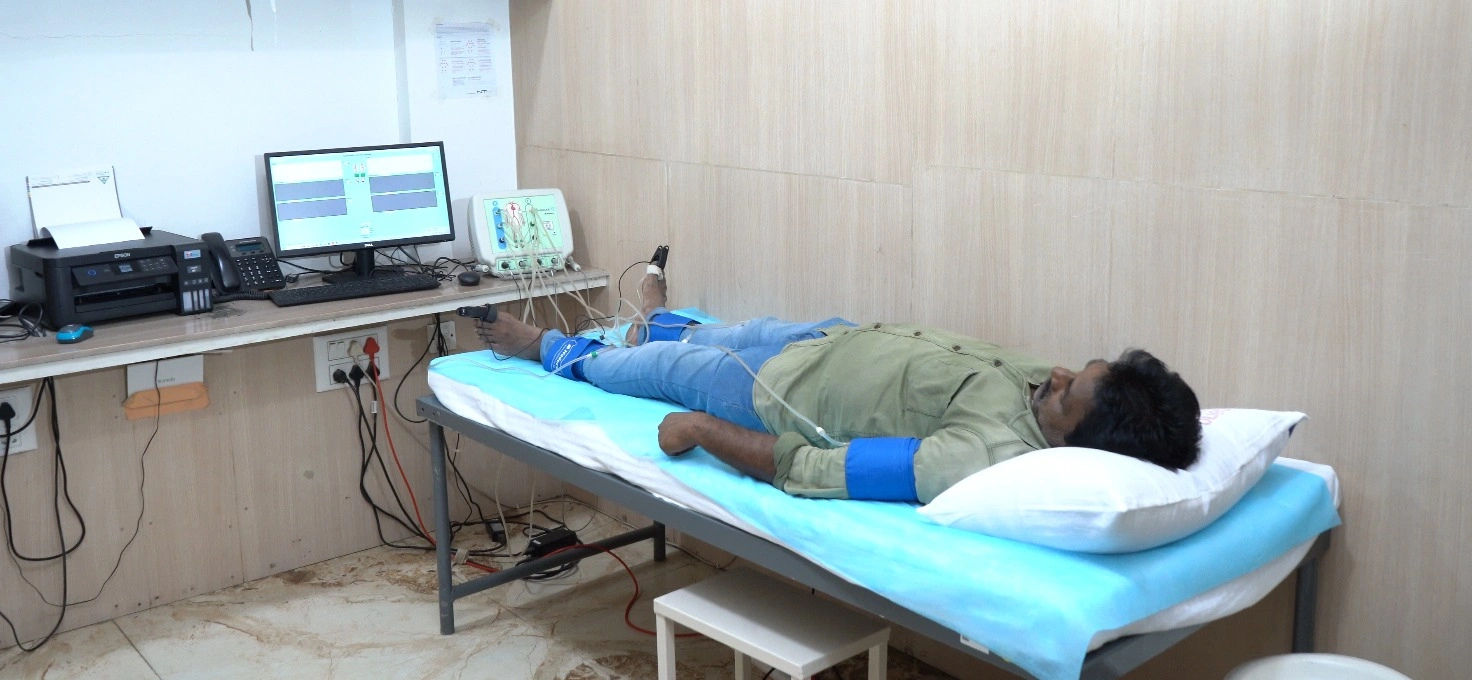
Ankle-Brachial Index (ABI) is a simple, non-invasive diagnostic test used to compare blood pressure in the ankle and arm to assess blood flow and detect peripheral artery disease (PAD)
It helps identify blockages or narrowing in the arteries of the lower limbs.
Overview
Detects peripheral artery disease (PAD)
Assesses risk of poor circulation in legs
Useful in diabetic and high-risk cardiac patients
Helps evaluate leg pain during walking (claudication)
Assists in monitoring vascular treatment outcomes
Workflow
Step 1: Patient Positioning
Patient lies in a relaxed, supine position.
Step 2: Blood Pressure Measurement (Arm)
Blood pressure cuff is placed on the arm and readings are taken.
Step 3: Blood Pressure Measurement (Ankle)
Cuff is placed on the ankle; Doppler device measures arterial pressure.
Step 4: Ratio Calculation
Ankle pressure is divided by arm pressure to calculate ABI.
Step 5: Interpretation
Values are analyzed to determine normal or reduced blood flow.
Step 6: Reporting
Results are documented and explained to the patient.
Benefits & Value
For Patients
Early detection of circulation problems
Painless and quick screening test
Helps prevent serious complications like ulcers or amputation
For Caregivers & Families
Identifies vascular risks early
Supports preventive care and lifestyle modification
Reduces complications from untreated PAD
For the Community
Promotes awareness of vascular health
Reduces incidence of limb-related complications
Supports preventive screening programs
Risks & Challenges
- • No significant risks (completely safe procedure)
- • Accuracy may vary in patients with calcified arteries (e.g., diabetes)
- • Requires proper technique for reliable results
Frequently Asked Questions