



.png)
HBOT
About HBOT
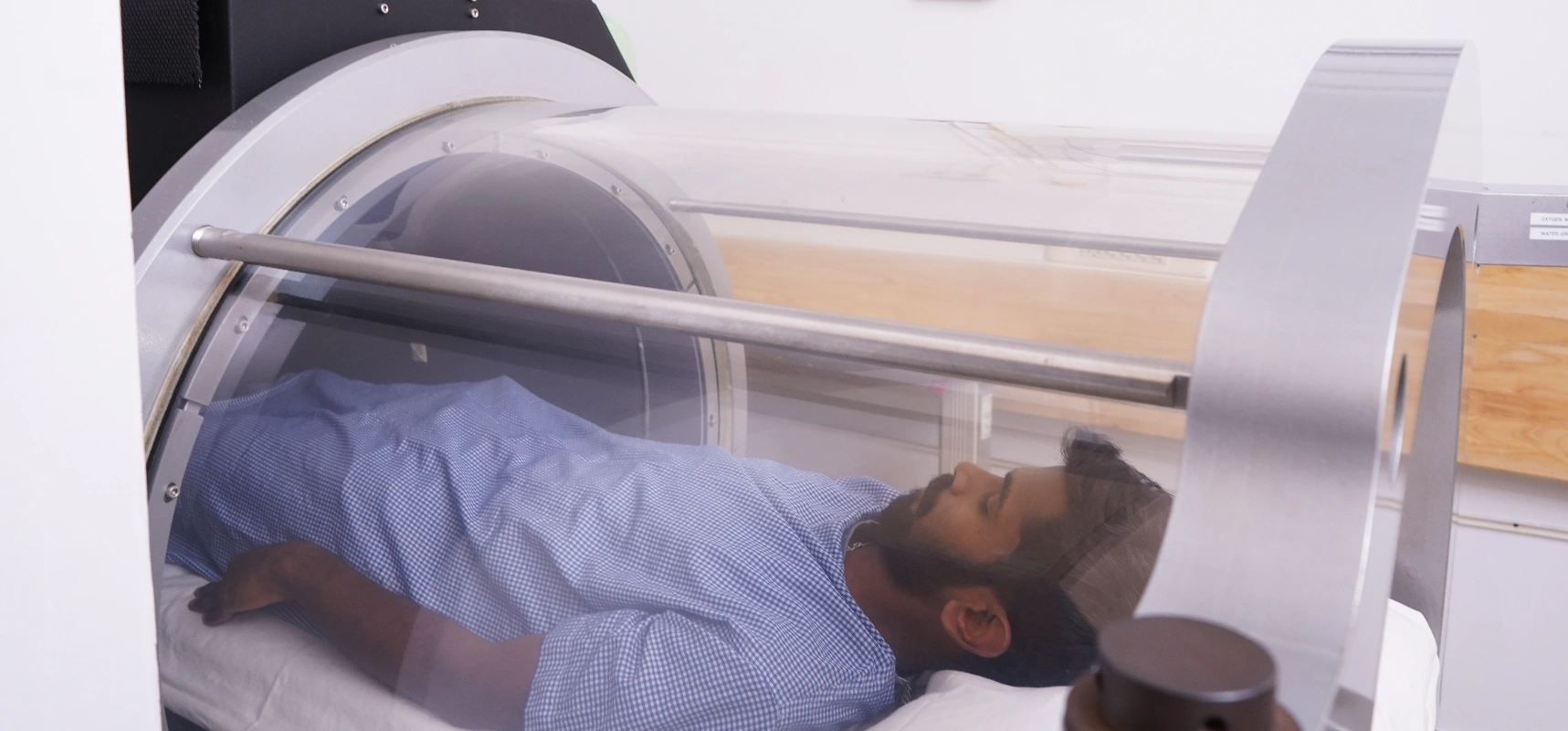
Hyperbaric Oxygen Therapy (HBOT) is an advanced medical treatment in which patients breathe 100% medical-grade oxygen inside a pressurized chamber
The increased atmospheric pressure enhances oxygen delivery to tissues, accelerates healing, reduces inflammation, and supports recovery in complex medical conditions.
Overview
Enhances wound healing in diabetic foot ulcers and non-healing wounds
Treats decompression sickness and carbon monoxide poisoning
Supports recovery in radiation injuries and soft tissue infections
Aids in management of certain neurological and vascular conditions
Improves tissue oxygenation in compromised blood supply areas
Workflow
Step 1: Medical Evaluation
Patient undergoes clinical assessment to determine suitability for HBOT.
Step 2: Chamber Preparation
Patient enters monoplace or multiplace hyperbaric chamber.
Step 3: Pressurization
Chamber pressure is gradually increased while patient breathes 100% oxygen.
Step 4: Therapeutic Session
Treatment session typically lasts 60–120 minutes under continuous monitoring.
Step 5: Decompression & Exit
Pressure is slowly normalized before the patient exits the chamber.
Step 6: Follow-up & Documentation
Progress is monitored and therapy sessions are scheduled as per protocol.
Benefits & Value
For Patients
Accelerated wound healing
Reduced risk of infection
Improved tissue oxygenation
For Caregivers & Families
Reduced need for repeated surgical interventions
Faster recovery timelines
Improved quality of life for chronic patients
For the Community
Decreases amputation rates in diabetic patients
Supports advanced wound care management
Promotes awareness of innovative oxygen-based therapies
Risks & Challenges
- • Mild ear discomfort due to pressure changes
- • Temporary vision changes (rare and reversible)
- • Requires multiple sessions for optimal outcomes
- • Patient compliance with treatment schedule
Frequently Asked Questions