



.png)
ICU
About ICU
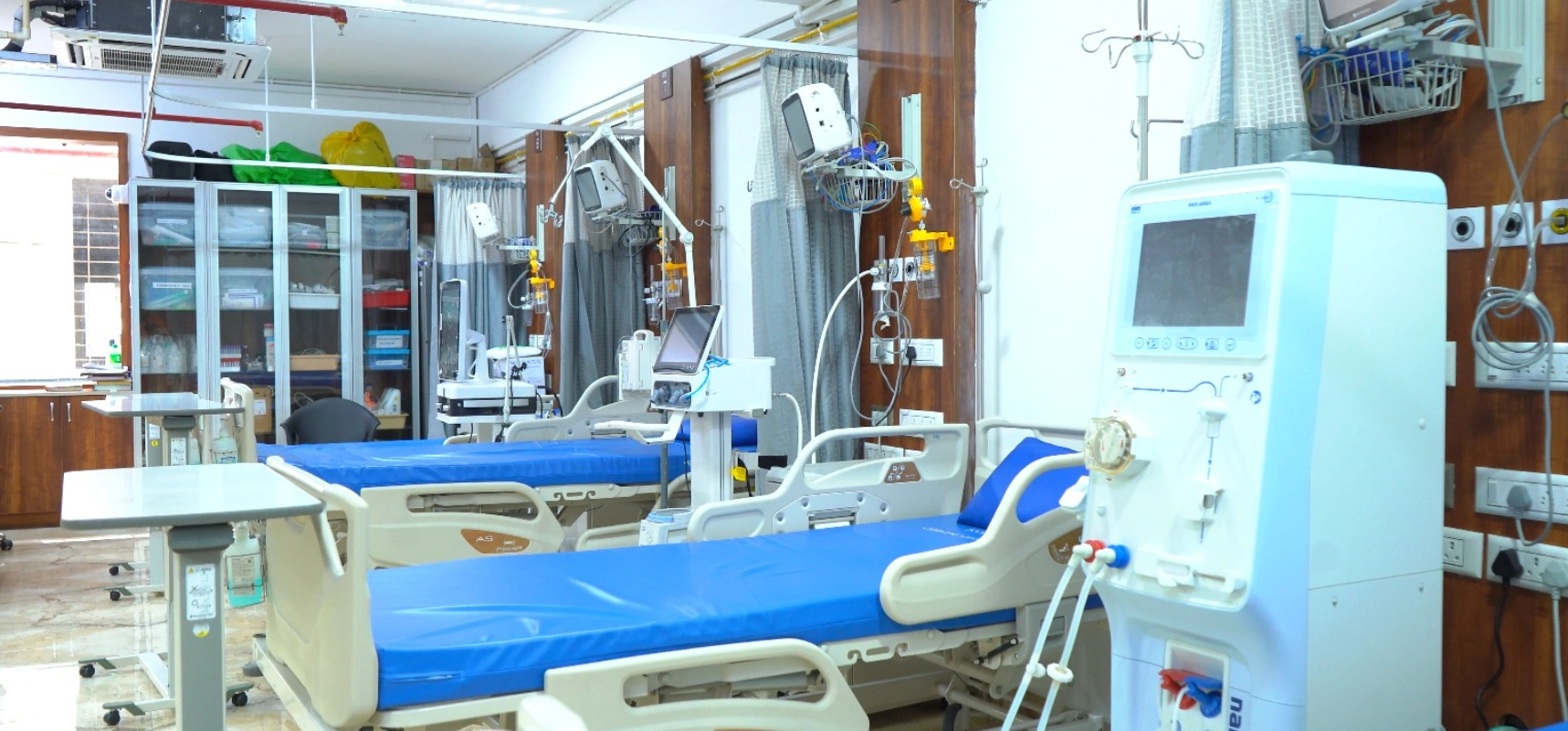
The Intensive Care Unit (ICU) is a specialized hospital department designed to provide continuous monitoring, advanced life support, and critical care treatment for patients with life-threatening conditions.
ICU care involves highly trained doctors, specialized nurses, advanced monitoring systems, and life-support technologies to stabilize and treat critically ill patients.
Overview
• Provides 24/7 monitoring of critically ill patients
• Supports vital organ functions such as breathing, heart activity, and blood circulation
• Manages severe infections, trauma, and organ failure
• Provides care for patients after major surgeries
• Stabilizes patients from medical emergencies like cardiac arrest or stroke
Workflow
Step 1: Admission & Risk Assessment
Patients are admitted based on severity and clinical need, often from the Emergency Department, Operation Theatres, or other hospital units.
Step 2: Stabilisation & Life Support
Immediate interventions may include ventilatory support, intravenous medications, fluid therapy, and emergency stabilization procedures.
Step 3: Continuous Monitoring
Advanced monitoring systems track vital parameters such as heart rate, blood pressure, oxygen levels, and organ function.
Step 4: Critical Care Treatment
Specialized treatments are provided for conditions such as severe infections, respiratory failure, cardiac complications, or organ dysfunction.
Step 5: Multidisciplinary Care
A team of intensivists, nurses, physiotherapists, and specialists collaborate to ensure comprehensive treatment and recovery.
Step 6: Recovery & Step-Down Care
Once the patient's condition stabilizes, they may be shifted to a step-down unit or general ward for further recovery.
Benefits & Value
For Patients
Rapid pain relief
Reduced swelling and inflammation
Faster recovery after injury or surgery
For Caregivers & Families
Helps manage post-surgical care effectively
Reduces need for pain medications
Supports quicker patient recovery
For the Community
Promotes effective injury management
Reduces complications from untreated inflammation
Encourages sports injury rehabilitation awareness
Risks & Challenges
- • • ICU care requires continuous monitoring and specialized staff
- • • Strict infection control protocols are maintained
- • • Advanced equipment requires trained medical supervision
- • • Patient recovery may require gradual step-down care
Frequently Asked Questions