


Cardiac Stress(TMT)
Nano Hospitals offers cardiac stress (TMT) testing in Bangalore, a 30-45 minute non-invasive test that monitors heart activity during treadmill or medication-induced exertion to detect coronary artery disease. Testing is supervised by cardiologists with emergency resuscitation readiness, available at both Bannerghatta Road and Uttarahalli branches.
About Cardiac Stress(TMT)
Cardiac Stress (TMT) Test Services at Nano Hospitals are specialized diagnostic procedures used to evaluate how well the heart functions during physical activity or controlled stress. Since the heart works harder during exertion, these tests help detect reduced blood flow, rhythm abnormalities, and other cardiac issues that may not appear when the body is at rest.
Stress testing plays a key role in diagnosing coronary artery disease, assessing exercise tolerance, and guiding treatment for patients with heart-related symptoms.
Overview
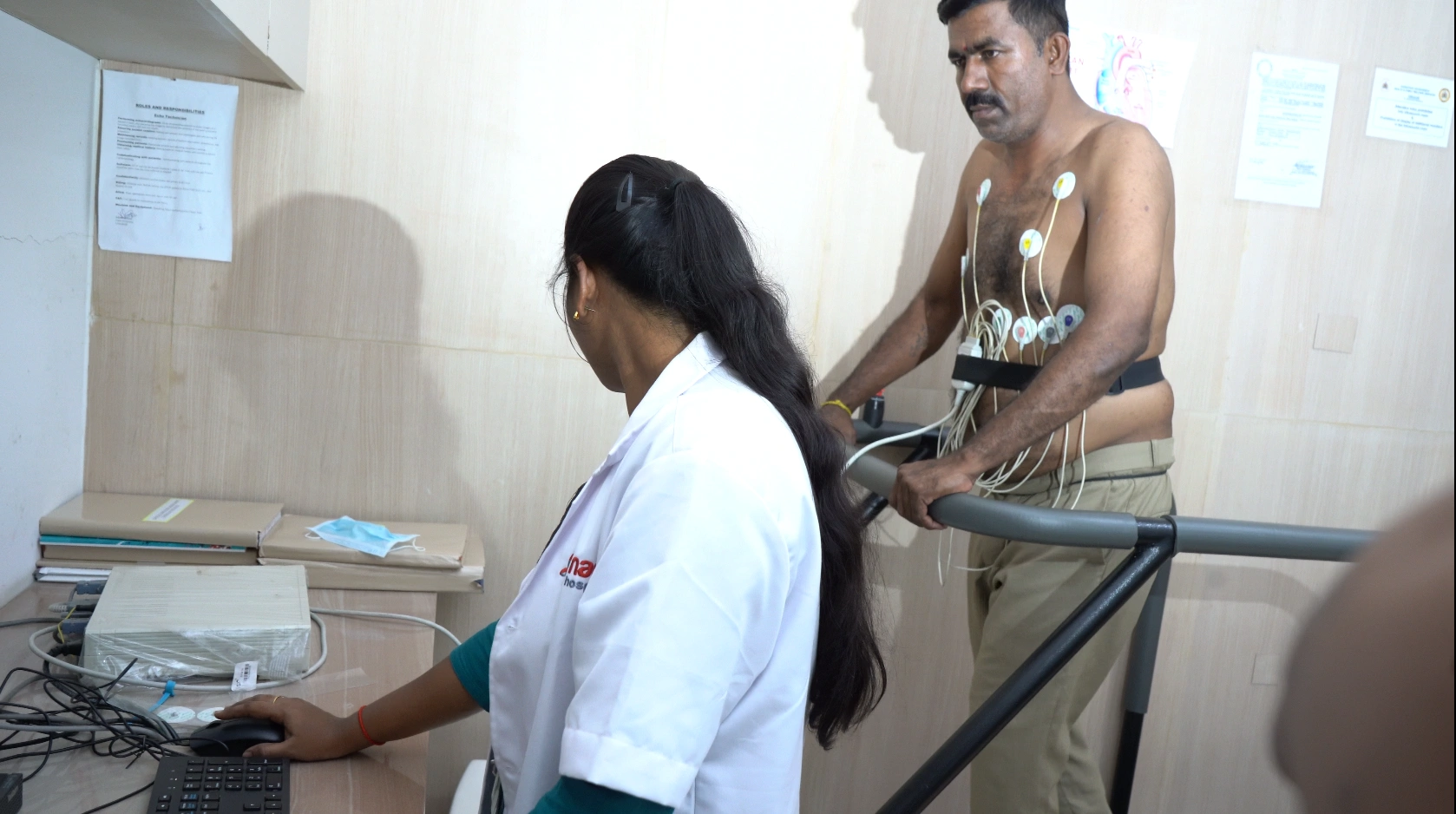
A cardiac stress(TMT) test monitors the heart’s activity while the patient exercises on a treadmill or stationary cycle. In patients unable to exercise, medications may be used to simulate the effect of physical stress on the heart. During the test, heart rate, blood pressure, breathing, and ECG changes are closely observed.
At Nano Hospitals, stress testing is conducted under medical supervision using advanced monitoring systems to ensure safety and accurate results.
Workflow
- Step 1: Medical Assessment A doctor evaluates symptoms such as chest pain, shortness of breath, palpitations, or known heart disease before recommending the test.
- Step 2: Baseline Recording Resting ECG, heart rate, and blood pressure are recorded before starting the stress phase.
- Step 3: Exercise or Medication-Induced Stress The patient walks on a treadmill with gradually increasing speed and incline, or receives medication that stimulates heart activity if exercise isn’t possible.
- Step 4: Continuous Monitoring ECG, blood pressure, and symptoms are monitored throughout to detect abnormal heart responses.
- Step 5: Recovery Monitoring After exercise stops, monitoring continues until heart rate and vitals return to normal.
- Step 6: Report and Evaluation A cardiologist analyses the results to identify signs of reduced blood flow or rhythm issue
Benefits & Value
For Patients
Effective removal of waste products and excess fluid from the blood
Helps manage symptoms and improve overall quality of life
Supports better control of fluid, electrolyte, and blood pressure levels
Provides ongoing kidney function support when kidneys cannot work adequately
For Doctors
Helps maintain stable fluid and electrolyte balance
Supports management of patients with advanced kidney disease
Enables regular monitoring of treatment response and patient condition
Helps reduce complications associated with kidney failure
For the Community
Improved access to essential kidney care and dialysis services
Supports better long-term management of chronic kidney disease
Reduces complications associated with untreated kidney failure
Promotes awareness and continuity of renal care
Risks & Challenges
- Temporary fatigue, shortness of breath, or chest discomfort
- Rare risk of abnormal heart rhythms during the test
- Very small chance of cardiac complications (test is closely supervised)
- Not suitable for patients with unstable heart conditions
Frequently Asked Questions
Is a cardiac stress test (TMT) painful, and what physical sensations occur during testing? +
No, a cardiac stress test is non-invasive and painless. Patients do not experience physical pain, though walking or running on the treadmill will cause temporary fatigue, increased heart rate, sweating, and shortness of breath as exercise intensity incrementally increases to evaluate heart function under physical workload.
How long does a cardiac stress test take at Nano Hospitals, Bangalore? +
A complete cardiac stress test appointment at Nano Hospitals Bangalore takes approximately 30 to 45 minutes. While the actual treadmill walking protocol lasts between 7 and 12 minutes, additional time is dedicated to skin preparation, 12-lead ECG placement, baseline readings, and post-exercise recovery monitoring.
What pre-test fasting, diet, and medication instructions apply before a cardiac stress test? +
Patients should avoid heavy meals, caffeine, alcohol, and tobacco for at least 3 to 4 hours prior to a cardiac stress test at Nano Hospitals Bangalore. Hydration with water is encouraged, but specific cardiac medications like beta-blockers may need temporary adjustment under cardiologist supervision.
Can elderly or mobility-impaired patients undergo a cardiac stress test at Nano Hospitals? +
Yes, elderly patients and individuals unable to exercise on a treadmill can safely undergo cardiac stress testing at Nano Hospitals Bangalore. For patients with mobility limitations, joint pain, or physical frailty, cardiologists administer pharmacological stress tests (using intravenous Dobutamine or Adenosine) to simulate exercise-induced cardiac workload safely.
Is a cardiac stress test safe, and what emergency protocols are maintained during the procedure? +
Yes, cardiac stress testing is highly safe and conducted under strict clinical protocols at Nano Hospitals Bangalore. Experienced cardiologists and trained cardiac nurses continuously monitor 12-lead ECG waveforms, blood pressure, and clinical symptoms, with emergency resuscitation equipment, crash carts, and defibrillators immediately accessible in testing rooms.
How to book a cardiac stress test (TMT) at Nano Hospitals in Bannerghatta Road or Uttarahalli? +
Cardiac stress tests (TMT) and cardiology consultations at Nano Hospitals Bangalore can be scheduled online via cardiac-stress or by calling the hospital. Patients can also visit the hospital reception desk to book an appointment.