




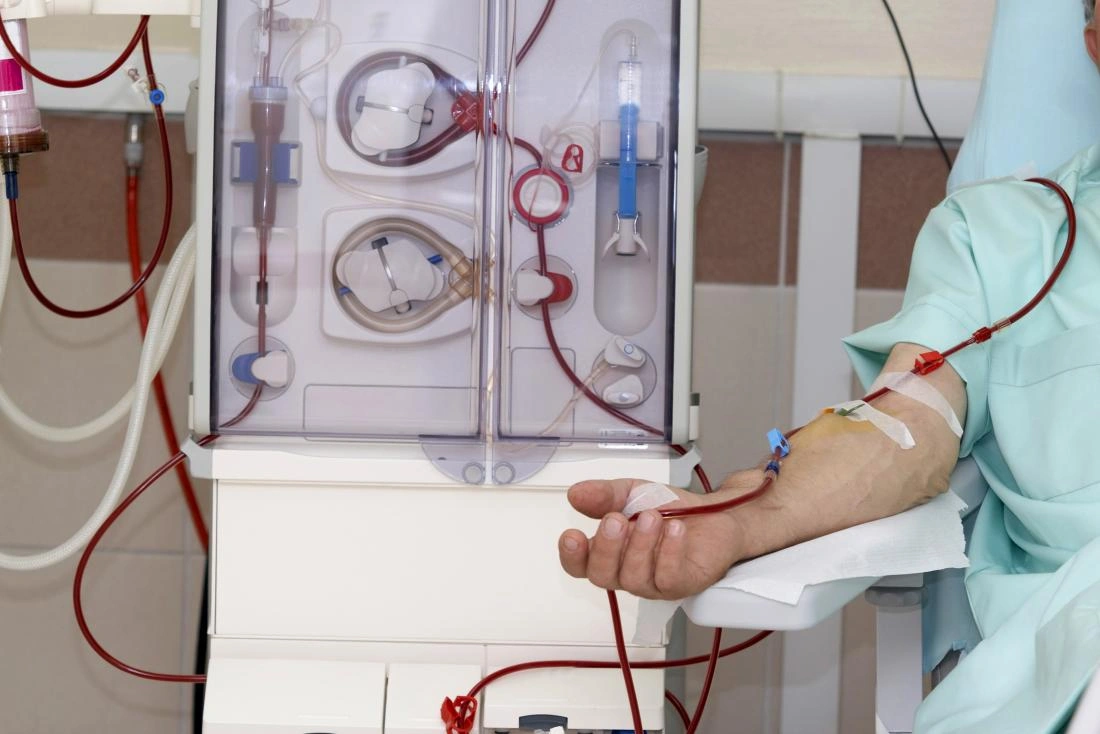
Dialysis
Nano Hospitals provides 24x7 dialysis in Bangalore, including hemodialysis, CAPD and ICU-based CRRT for patients with acute kidney injury or chronic kidney disease, under nephrologist supervision. Sessions take 3-4 hours, with emergency and ICU-linked dialysis available at both Bannerghatta Road and Uttarahalli branches.
About Dialysis
Dialysis is a life-sustaining treatment that performs the essential functions of the kidneys when they are unable to do so adequately. .
It removes waste products, excess fluids, and balances electrolytes in the blood—critical for patients with acute kidney injury (AKI) or chronic kidney disease (CKD)
Overview
Dialysis at Nano Hospitals follows a clinically structured, patient-safe pathway:
- Step 1: Nephrology Evaluation A nephrologist assesses kidney function, symptoms, and urgency to determine the need and type of dialysis.
- Step 2: Access & Readiness Vascular access (temporary or permanent) is evaluated or established to ensure safe blood flow during dialysis.
- Step 3: Dialysis Session Blood is circulated through a dialysis machine where toxins and excess fluids are filtered out.
- Step 4: Monitoring & Adjustment Vital signs and blood parameters are monitored throughout to ensure stability and comfort.
- Step 5: Ongoing Care Planning Post-session assessment guides the frequency of future sessions and supportive treatment.
Workflow
24×7 Dialysis Services at Nano Hospitals are delivered through round-the-clock readiness and clinical oversight:
Modern dialysis machines with safety monitoring systems
Trained dialysis nurses and technicians available 24×7
Nephrologist supervision and on-call specialist support
Strict infection-control and NABH-aligned safety protocols
Seamless access to ICU for critically ill patients requiring dialysis
This ensures uninterrupted renal care, even during nights, weekends, and emergencies.
Benefits & Value
For Patients
Effective removal of waste products and excess fluid from the blood
Helps manage symptoms and improve overall quality of life
Supports better control of fluid, electrolyte, and blood pressure levels
Provides ongoing kidney function support when kidneys cannot work adequately
For Doctors
Helps maintain stable fluid and electrolyte balance
Supports management of patients with advanced kidney disease
Enables regular monitoring of treatment response and patient condition
Helps reduce complications associated with kidney failure
For the Community
Improved access to essential kidney care and dialysis services
Supports better long-term management of chronic kidney disease
Reduces complications associated with untreated kidney failure
Promotes awareness and continuity of renal care
Risks & Challenges
24×7 availability, including emergency dialysis
ICU-supported dialysis for critically ill patients
Dedicated renal care teams and nephrology oversight
NABH-aligned infection control and safety practices
Patient-centred scheduling and compassionate care
Frequently Asked Questions
Are 24x7 dialysis services available at Nano Hospitals across Bannerghatta Road and Uttarahalli? +
Yes, round-the-clock 24x7 dialysis services are available at Nano Hospitals across both Bannerghatta Road and Uttarahalli facilities in Bengaluru. Equipped with advanced hemodialysis machines and high-flux dialyzers, both units provide continuous renal replacement therapy for scheduled outpatients and urgent emergency admissions.
What advanced types of dialysis treatments are available at Nano Hospitals, Bangalore? +
Nano Hospitals Bangalore provides high-efficiency hemodialysis (HD) featuring advanced volumetric ultrafiltration machines, ultra-pure water treatment plants (RO systems), and strict single-use dialyzer protocols. Nephrologists also offer consultation for continuous ambulatory peritoneal dialysis (CAPD) and continuous renal replacement therapy (CRRT) for ICU patients.
Who requires dialysis treatment, and what clinical conditions indicate kidney failure? +
Dialysis treatment is required for patients with severe acute kidney injury or Stage 5 Chronic Kidney Disease (CKD) progressing to End-Stage Renal Disease (ESRD), where estimated Glomerular Filtration Rate (eGFR) drops below 15 mL/min. It removes metabolic toxins, urea, creatinine, and excess fluid when kidneys fail.
What is the cost of dialysis treatment in Bengaluru at Nano Hospitals? +
Dialysis treatment cost at Nano Hospitals Bangalore depends on whether standard hemodialysis, emergency bedside CRRT, or specialized dialyzer reuse protocols are required. Nano Hospitals offers transparent, affordable dialysis packages in Bangalore, accepting major government health schemes, cashless insurance policies, and TPA pre-authorization.
Is hemodialysis treatment painful, and what physical sensations do patients feel? +
No, hemodialysis is non-invasive and generally painless. Patients may experience slight, temporary discomfort during needle insertion into the vascular access site (AV fistula or catheter). During fluid removal, minor muscle cramps, low blood pressure, or mild fatigue may occur, monitored continuously by renal technicians.
How long does a standard hemodialysis session take at Nano Hospitals, Bangalore? +
A standard hemodialysis session at Nano Hospitals Bangalore takes approximately 3 to 4 hours per visit. This duration is necessary to safely filter metabolic waste products, equalize electrolyte levels, and perform gradual fluid ultrafiltration without causing sudden drops in blood pressure or physical distress.
Are senior consultant nephrologists and trained renal technicians available for dialysis care? +
Yes, all dialysis treatments at Nano Hospitals Bangalore are directed by senior consultant nephrologists and executed by certified renal dialysis technicians and ICU-trained nurses. Specialists continuously evaluate vascular access integrity, dialysate flow rates, biochemical lab trends, and individualized ultrafiltration targets during every run.
Is emergency dialysis available 24/7 for critical kidney conditions at Nano Hospitals? +
Yes, emergency dialysis is operational 24 hours a day, 7 days a week at Nano Hospitals Bangalore. The casualty and intensive care units provide immediate bedside hemodialysis and Continuous Renal Replacement Therapy (CRRT) for critical conditions including acute pulmonary edema, hyperkalemia, and severe uremic encephalopathy.
How frequently do Chronic Kidney Disease (CKD) patients require dialysis sessions? +
Most patients with End-Stage Renal Disease (ESRD) require hemodialysis 2 to 3 times per week at Nano Hospitals Bangalore. Exact treatment frequency and duration are customized by attending nephrologists based on residual kidney function, daily fluid accumulation, serum potassium, urea clearance, and overall metabolic balance.
What infection control and safety protocols are maintained in the dialysis unit? +
Yes, dialysis treatment at Nano Hospitals Bangalore adheres to international infection control guidelines. The facility utilizes dedicated dialyzers, strict single-use tubings, rigorous machine disinfection between patient shifts, dedicated isolated stations for infectious serology markers (HBsAg/HCV/HIV), and microbiological testing of RO water supplies.
Can chronic kidney disease patients maintain an active lifestyle while undergoing dialysis? +
Yes, patients undergoing regular dialysis at Nano Hospitals Bangalore can maintain fulfilling, active lifestyles, including working, traveling, and light exercise. Adhering to scheduled dialysis sessions, prescribed medications, and dietary guidelines allows patients to control uremic symptoms, preserve energy levels, and sustain high quality of life.
What dietary, fluid, and medication precautions should dialysis patients follow? +
Dialysis patients at Nano Hospitals Bangalore must restrict sodium, potassium, phosphorus, and daily fluid intake between sessions to prevent fluid overload and cardiac complications. Patients must also take prescribed phosphate binders, erythropoietin injections for anemia, and blood pressure medications strictly as directed by nephrologists.
Why choose Nano Hospitals for kidney dialysis treatment in South Bengaluru? +
Nano Hospitals is a premier choice for dialysis in South Bengaluru, offering state-of-the-art hemodialysis units, 24/7 emergency availability, experienced consultant nephrologists, stringent infection control standards, and affordable pricing models conveniently located across Bannerghatta Road and Uttarahalli for continuous patient care.
Is dialysis treatment safe and adapted for elderly kidney patients? +
Yes, dialysis is safely administered to elderly patients at Nano Hospitals Bangalore using gentle ultrafiltration rates and customized hemodynamic monitoring. Nephrologists adjust blood flow parameters, dialysate temperatures, and vascular access protocols to accommodate fragile cardiac status, joint mobility needs, and age-related physiological factors.
Can patients schedule and book recurring dialysis appointments in advance? +
Yes. 24×7 dialysis services are available at Nano Hospitals Bangalore. Patients can book individual or recurring dialysis appointments through dialysis, by calling the hospital, or by visiting the hospital reception desk. Dialysis services are available at both Bannerghatta Road and Uttarahalli branches. Please call Nano Hospitals before visiting to confirm availability and treatment timings.