




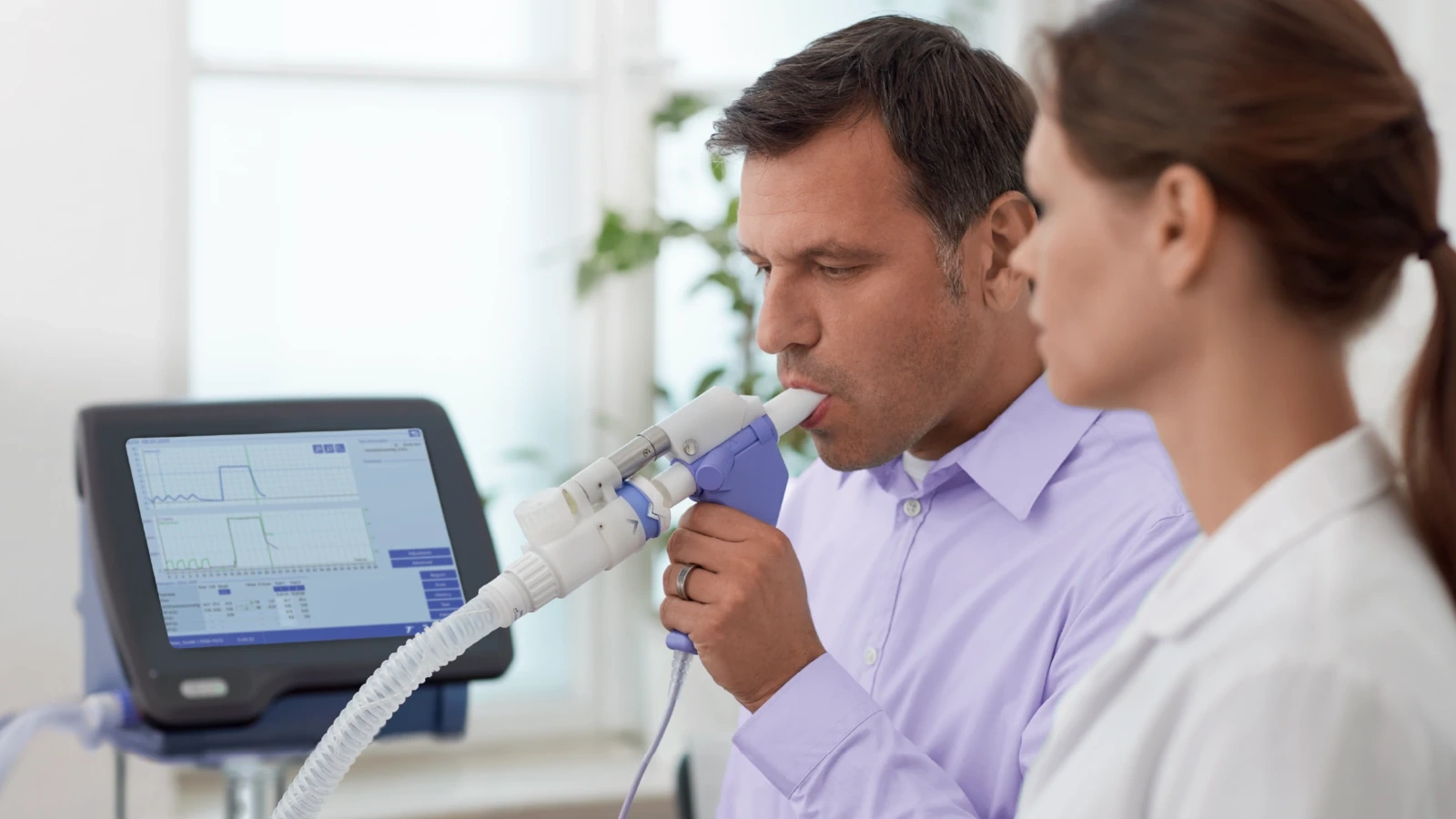
PFT
Nano Hospitals provides Pulmonary Function Tests (PFT) in Bangalore to evaluate how well the lungs are working. PFT measures lung capacity, airflow and gas exchange to help diagnose and monitor respiratory conditions.
About PFT
Pulmonary Function Test (PFT) Services at Nano Hospitals are specialized diagnostic tests used to evaluate how well the lungs are working. These tests measure lung capacity, airflow, and gas exchange to help diagnose and monitor respiratory conditions such as asthma, chronic obstructive pulmonary disease (COPD), interstitial lung disease, and other breathing disorders.
PFT plays a vital role in assessing lung health, guiding treatment, and tracking response to respiratory therapies.
Overview
Pulmonary Function Tests are a group of non-invasive breathing tests that assess how efficiently the lungs inhale, exhale, and transfer oxygen into the blood. The most common component is spirometry, which measures airflow and lung volume.
At Nano Hospitals, PFT services are conducted using advanced computerized systems that provide accurate and detailed reports for respiratory evaluation.
Workflow
- Step 1: Medical Evaluation A doctor recommends PFT if a patient has chronic cough, breathlessness, wheezing, or requires monitoring of a known lung condition.
- Step 2: Test Preparation The patient is guided on proper breathing techniques. Tight clothing and heavy meals are usually avoided before testing.
- Step 3: Spirometry Testing The patient breathes into a mouthpiece connected to a spirometer, following instructions to inhale and exhale forcefully.
- Step 4: Additional Lung Measurements Depending on the requirement, lung volumes and diffusion capacity tests may also be performed.
- Step 5: Analysis and Reporting Results are analysed by specialists to identify airflow limitation, lung restriction, or gas exchange problems.
Benefits & Value
For Patients
- Early detection of lung diseases
- Better management of asthma and COPD
- Monitoring of treatment response and disease progression
For Doctors
- Objective assessment of lung function
- Helps differentiate between obstructive and restrictive lung disease
- Guides medication adjustments and therapy plans
For the Community
- Improved awareness and screening of respiratory diseases
- Better long-term management of chronic lung conditions
- Reduced hospitalizations due to early intervention
Risks & Challenges
- Temporary dizziness or shortness of breath during forceful breathing
- May be difficult for very elderly or severely breathless patients
- Requires patient cooperation for accurate results
- Not suitable during acute severe respiratory distress
Frequently Asked Questions
Is a Pulmonary Function Test (PFT) painful or invasive? +
No, a Pulmonary Function Test (PFT) is completely non-invasive and painless. At Nano Hospitals Bangalore, patients breathe into a sanitized, sterile mouthpiece connected to a digital spirometer while wearing a soft nose clip, allowing pulmonology technicians to record lung volume and airflow velocity without needles or discomfort.
How long does a Pulmonary Function Test (PFT) take at Nano Hospitals? +
A standard Pulmonary Function Test (PFT) at Nano Hospitals Bangalore typically takes 20 to 40 minutes. If your pulmonologist orders a bronchodilator reversibility test, an initial spirometry trial is followed by a short 15-minute rest after inhaling medication before repeating the breathing maneuvers to evaluate airway responsiveness.
Do I need to fast or follow special preparations before a Pulmonary Function Test (PFT)? +
Fasting is not required before a PFT, but you should avoid heavy meals for 2 hours prior to prevent stomach fullness from restricting diaphragm movement. Pulmonologists at Nano Hospitals Bangalore advise avoiding smoking, intense exercise, and holding specific bronchodilator inhalers as instructed by your doctor before the test.
Can children undergo Pulmonary Function Testing (PFT) at Nano Hospitals? +
Yes, children aged 5 to 6 years and older can successfully undergo a Pulmonary Function Test (PFT) at Nano Hospitals Bangalore. Our pediatric pulmonology team uses child-friendly interactive visual software and encouraging coaching techniques to help young patients follow the forced breathing instructions required for accurate spirometry.
Is a Pulmonary Function Test (PFT) safe for patients with respiratory symptoms? +
Yes, a Pulmonary Function Test (PFT) is an exceptionally safe and routine diagnostic procedure. At Nano Hospitals Bangalore, PFTs are conducted under continuous technician supervision with safety protocols in place. Medical history is screened beforehand to defer testing if recent eye, thoracic, or abdominal surgery has occurred.
How can patients book a Pulmonary Function Test (PFT) at Nano Hospitals, Bangalore? +
Patients can schedule a Pulmonary Function Test (PFT) at Nano Hospitals Bangalore online via pft, by calling our diagnostic helpline, or by visiting pulmonology reception desks across Bannerghatta Road and Uttarahalli campuses for comprehensive respiratory health evaluations.