




EEG Services
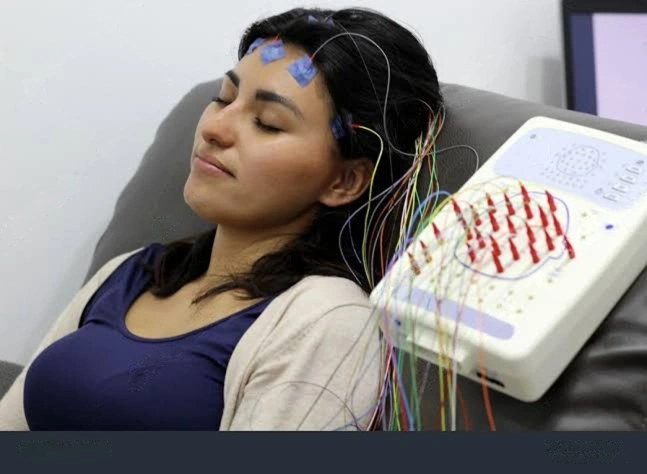
Nano Hospitals provides EEG services in Bangalore to record the brain’s electrical activity using sensors placed on the scalp. EEG testing can help doctors evaluate seizures and other concerns affecting brain activity.
About EEG Services
EEG (Electroencephalogram) Services at Nano Hospitals are specialized diagnostic tests used to measure and record the electrical activity of the brain. This non-invasive procedure helps doctors evaluate neurological conditions by identifying abnormal brain wave patterns associated with seizures, epilepsy, sleep disorders, brain infections, and other neurological concerns.
EEG plays a crucial role in early diagnosis, treatment planning, and monitoring of brain-related disorders in both adults and children.
Overview
An EEG is a diagnostic test that records the brain’s electrical signals using small electrodes placed on the scalp. These signals are displayed as wave patterns that help neurologists detect abnormalities in brain function.
At Nano Hospitals, EEG services are conducted using advanced digital EEG systems that provide high-quality recordings for precise neurological assessment.
Workflow
- Step 1: Doctor’s Evaluation A neurologist recommends an EEG if a patient experiences seizures, fainting episodes, unexplained confusion, memory issues, or sleep disturbances.
- Step 2: Preparation The patient’s scalp is cleaned, and multiple small electrodes are placed on specific areas of the head using a conductive gel or paste.
- Step 3: Brain Wave Recording The EEG machine records brain activity while the patient rests quietly. In some cases, stimuli like flashing lights or deep breathing may be used.
- Step 4: Monitoring Period The test usually lasts 20–60 minutes, though longer monitoring may be required for certain conditions.
- Step 5: Interpretation and Reporting A neurologist analyses the recorded wave patterns and prepares a detailed report to guide diagnosis and treatment.
Benefits & Value
For Patients
- Early diagnosis of epilepsy and seizure disorders
- Detection of sleep-related neurological problems
- Safe and painless brain function evaluation
For Doctors
- Objective data on brain activity patterns
- Support in diagnosing complex neurological conditions
- Monitoring effectiveness of anti-epileptic treatments
For the Community
- Better neurological care access locally
- Early intervention for seizure disorders
- Improved management of chronic neurological diseases
Risks & Challenges
- Mild scalp irritation from electrode placement
- Rare chance of triggering a seizure during stimulation tests
- Movement or muscle activity may affect recording quality
- Need for patient cooperation for accurate results
Frequently Asked Questions
Is an EEG test available at Nano Hospitals across Bannerghatta Road and Uttarahalli? +
Yes, Electroencephalogram (EEG) testing is available at both Bannerghatta Road and Uttarahalli facilities of Nano Hospitals in Bengaluru. Equipped with digital multi-channel EEG monitoring suites, both locations provide comprehensive brain wave evaluations for routine outpatient neurology consultations and urgent emergency inpatient evaluations.
What is an EEG test, and what electrical brain activity does it measure? +
An Electroencephalogram (EEG) is a non-invasive neurodiagnostic test that records the brain's spontaneous electrical activity using small scalp electrodes. At Nano Hospitals Bangalore, digital EEG monitoring measures voltage fluctuations from neuronal ionic currents, detecting abnormal brain wave patterns, epileptiform discharges, focal slows, and encephalopathy.
When is an EEG test recommended by consultant neurologists? +
Neurologists at Nano Hospitals Bangalore recommend an EEG for patients presenting with unprovoked seizures, suspected epilepsy, unexplainable fainting spells (syncope), sudden memory loss, altered consciousness, head trauma, sleep disorders, or encephalopathy. It evaluates cortical function to pinpoint the focus of abnormal electrical brain activity.
What is the cost of an EEG test in Bengaluru at Nano Hospitals? +
The cost of an EEG test at Nano Hospitals Bangalore is transparent and competitively priced. Total pricing depends on whether a standard routine 30-minute awake EEG, extended sleep-deprived EEG, or specialized bedside emergency EEG is conducted, with coverage accepted across major private health insurance and government schemes.
How long does an EEG test session take at Nano Hospitals, Bangalore? +
A routine outpatient EEG session at Nano Hospitals Bangalore typically takes 30 to 60 minutes to complete. This window includes 15 minutes of scalp electrode placement, 20 to 30 minutes of continuous brain wave recording—including hyperventilation and photic stimulation tests—and quick electrode removal.
Is an EEG test painful, uncomfortable, or dangerous for patients? +
No, an EEG test is completely painless, non-invasive, and safe. Electrodes are attached gently to the scalp using water-soluble conductive paste to record brain signals passively. No electrical current is passed into the body, ensuring zero sensation or discomfort for patients at Nano Hospitals Bangalore.
What pre-test preparation instructions should patients follow before an EEG? +
Patients undergoing an EEG at Nano Hospitals Bangalore should wash their hair thoroughly the night before or morning of the test, keeping it free of oils, gels, or sprays. Patients should eat regular meals to prevent low blood sugar and avoid caffeine or stimulants prior to testing.
Can an EEG test accurately detect epilepsy and seizure disorders? +
Yes, an EEG is the primary clinical diagnostic tool for detecting epilepsy and classifying seizure disorders at Nano Hospitals Bangalore. By capturing abnormal epileptiform spikes, sharp waves, or focal slowing patterns, expert neurologists can differentiate between focal, generalized, epileptic, and non-epileptic psychogenic seizure events.
How quickly are digital EEG reports generated and interpreted at Nano Hospitals? +
Yes, digital EEG reports are processed rapidly at Nano Hospitals Bangalore. Tracings are immediately recorded into digital systems, allowing consultant neurologists to interpret wave data and issue verified diagnostic reports within a few hours for outpatients, or urgently for emergency casualty and ICU admissions.
Is an EEG test safe for pediatric, infant, and elderly patients? +
Yes, an EEG test is exceptionally safe for patients of all age groups, including newborns, young children, and elderly individuals at Nano Hospitals Bangalore. Because the procedure uses passive sensors without radiation, injections, or discomfort, it is routinely performed on pediatric and geriatric neurology patients.
Can an EEG test detect brain tumors or structural brain lesions? +
While an EEG detects localized abnormal electrical slowing caused by structural brain lesions, it cannot directly visualize brain tumors. Neurologists at Nano Hospitals Bangalore combine suspicious EEG findings with high-resolution neuroimaging, such as Brain MRI or CT scans, for precise structural and tissue diagnosis.
Is emergency EEG testing available for acute neurological conditions? +
Yes, emergency EEG testing is available for critical neurological conditions at Nano Hospitals Bangalore. The casualty and intensive care units utilize continuous or urgent bedside EEG monitoring to evaluate status epilepticus, unexplained coma, acute encephalopathy, and silent non-convulsive seizures in critically ill patients.
Why choose Nano Hospitals for EEG testing and neurology care in South Bengaluru? +
Nano Hospitals is a leading choice for neurodiagnostic care in South Bengaluru, offering state-of-the-art digital EEG machinery, senior consultant neurologists, rapid turnaround times, affordable pricing, and strategic dual-branch availability across Bannerghatta Road and Uttarahalli for complete neurological diagnostic and therapeutic support.
How to schedule an EEG test or walk in at Nano Hospitals, Bangalore? +
Patients can schedule an EEG appointment at Nano Hospitals Bangalore online via nanohospitals.in/health-facilities/eeg-services, by phone, or directly at neurology desks across Bannerghatta Road and Uttarahalli facilities. While advance booking ensures preferred time slots, walk-in patients are accommodated based on daily schedule availability.
What clinical next steps follow an EEG test completion at Nano Hospitals? +
Following an EEG test at Nano Hospitals Bangalore, a consultant neurologist analyzes the brain wave tracings. The specialist discusses the diagnostic report with the patient, recommending tailored anti-epileptic medication regimens, sleep hygiene adjustments, or secondary diagnostic tests like Brain MRI or video-EEG monitoring if required.
Can we book an appointment for EEG services at Nano Hospitals? +
Yes. EEG consultations and tests at Nano Hospitals Bangalore can be scheduled by appointment through eeg-services, by calling the hospital, or by visiting the hospital reception desk. EEG services are available at both Bannerghatta Road and Uttarahalli branches.