


.png)

ICU & NICU
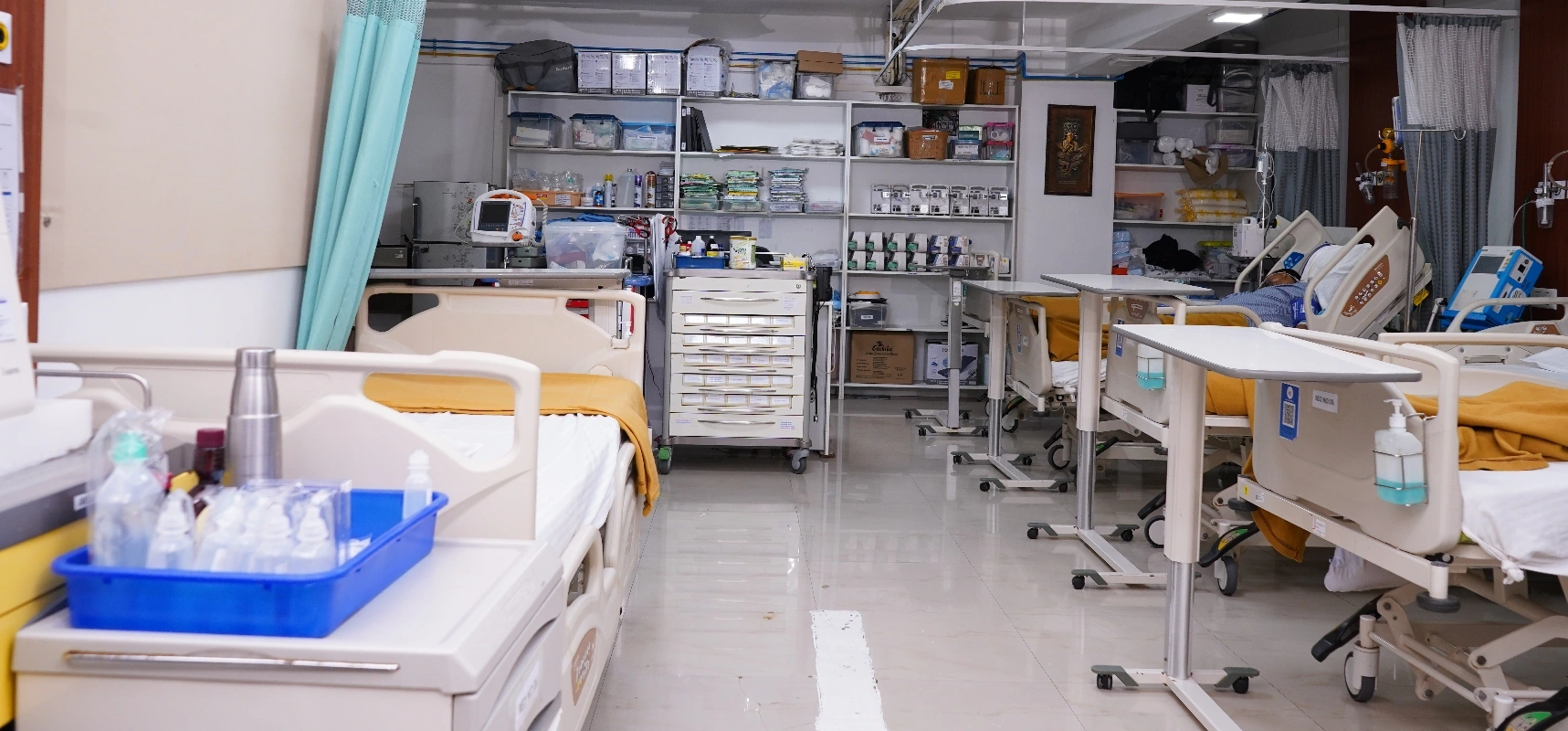
About ICU & NICU
The ICU provides advanced care for critically ill adults, while the NICU supports premature and critically ill newborns requiring specialised monitoring.
Both units operate round the clock with trained intensivists and neonatologists.
These units are essential for managing severe infections, respiratory failure, cardiac and neurological emergencies, post-operative complications, and premature or medically fragile newborns
Overview
Care within the ICU and NICU follows a structured, vigilant clinical pathway:
Step 1: Admission & Risk Assessment
Patients are admitted based on severity and clinical need, often from Emergency, Operation Theatres, or Labour Rooms.
Step 2: Stabilisation & Life Support
Immediate interventions may include ventilatory support, cardiac monitoring, intravenous medications, fluids, and specialised neonatal support.
Step 3: Continuous Monitoring
Vital parameters—heart rate, oxygen levels, blood pressure, and neurological status— are monitored continuously.
Step 4: Multidisciplinary Care
Intensivists coordinate closely with cardiologists, neurologists, surgeons, neonatologists, and anesthesiologists.
Step 5: Recovery & Transition
As the patient stabilises, care is gradually stepped down to a ward or specialised unit.
Workflow
ICU / NICU services at Nano Hospitals are delivered through high-intensity clinical preparedness:
Dedicated intensivists, neonatologists, and trained critical-care nurses on duty 24×7
Advanced life-support equipment, ventilators, and monitoring systems
NABH-aligned infection control and safety protocols
Immediate access to diagnostics (CT, X-Ray, Lab, ECG)
Integrated communication systems for rapid decision-making
This ensures consistent, high-quality critical care even during complex or rapidly changing clinical situations.
Benefits & Value
For Patients
Continuous monitoring
Advanced life support
Improved survival rates
For Caregivers & Families
Reassurance of constant supervision
Transparent updates
Structured discharge guidance
For the Community
Critical care access
Reduced mortality
Stronger emergency response support for the region
Risks & Challenges
- • Critical care involves inherent challenges, including:
- • High infection risk due to illness severity
- • Organ failure and rapid clinical changes
- • Emotional stress for families
- • Risk mitigation at Nano Hospitals includes:
- • Strict infection-control practices
- • Continuous monitoring and early intervention
- • Experienced critical-care teams and standardised protocols
- • Clear communication with families during care transitions
 Book An Appointment