




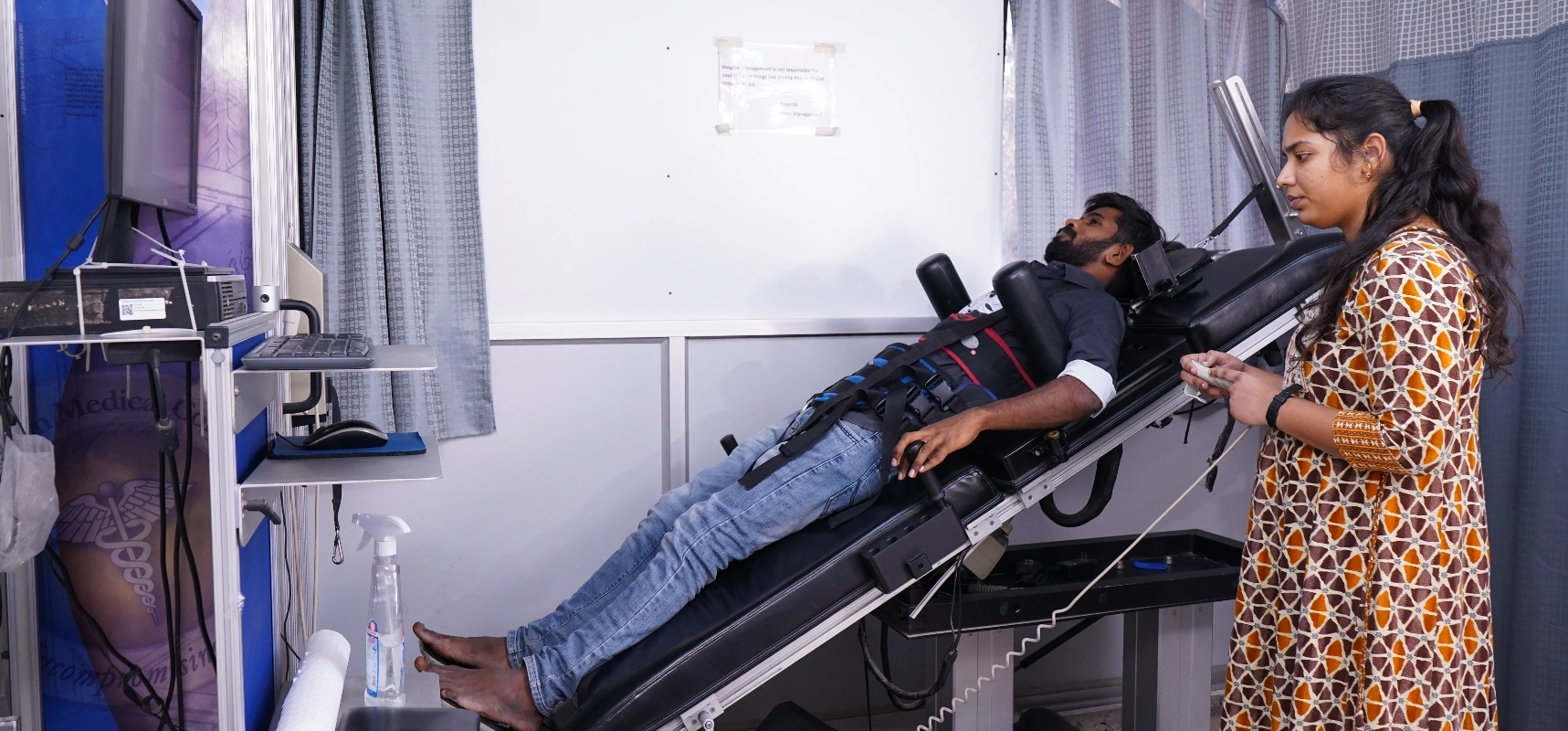
IDD- (intervertebral Disc Dynamics)
Nano Hospitals offers IDD Therapy in Bangalore, a non-surgical computerized spinal decompression treatment for slipped discs, sciatica and chronic back or neck pain. Delivered by physiotherapists over 10-20 sessions of 20-45 minutes each, it helps many patients avoid spine surgery, with care available at both Bannerghatta Road and Uttarahalli branches.
About IDD- (intervertebral Disc Dynamics)
Intervertebral Disc Dynamics (IDD Therapy) is a non-surgical spinal decompression treatment designed to relieve back and neck pain caused by disc-related conditions
It uses a computerized traction system to gently stretch the spine, reduce pressure on intervertebral discs, and promote natural healing.
Overview
Treats slipped disc (herniated disc) and bulging disc
Effective for sciatica, nerve compression, and chronic back pain
Helps in cervical and lumbar spine disorders
Improves disc hydration and nutrient exchange
Reduces pressure on spinal nerves
Workflow
- Step 1: Clinical Assessment Patient undergoes evaluation including history, physical exam, and imaging (MRI/X-ray if required).
- Step 2: Treatment Planning Customized therapy protocol is designed based on condition and severity.
- Step 3: Patient Positioning Patient is positioned on the IDD therapy table with support harness.
- Step 4: Controlled Decompression Computer-controlled traction gently stretches the spine in cycles.
- Step 5: Monitoring Therapy is monitored continuously for comfort and effectiveness.
- Step 6: Session Completion & Follow-up Each session lasts 20–45 minutes; multiple sessions are planned for optimal results.
Benefits & Value
For Patients
Non-surgical pain relief
Reduced nerve compression and inflammation
Improved mobility and flexibility
For Caregivers & Families
Avoidance of surgical risks
Faster recovery and return to daily activities
Improved patient comfort and quality of life
For the Community
Reduces dependency on spine surgeries
Promotes non-invasive pain management solutions
Supports early treatment of spinal disorders
Risks & Challenges
Mild soreness after initial sessions
Temporary discomfort during traction
Rare cases of symptom aggravation if not properly assessed
Requires multiple sessions for best results
Not suitable for severe spinal instability or fractures
Patient adherence to therapy schedule is essential
Frequently Asked Questions
Is IDD Therapy (Intervertebral Differential Dynamics) painful or uncomfortable for spine patients? +
No, IDD (Intervertebral Differential Dynamics) Therapy is completely non-invasive and virtually painless. At Nano Hospitals Bangalore, patients experience a gentle, targeted pulling or stretching sensation along the lumbar or cervical spine, relieving nerve pressure caused by herniated or bulging discs while reclining comfortably.
How long does a single IDD Therapy spinal decompression treatment session take at Nano Hospitals? +
A single IDD Therapy session at Nano Hospitals Bangalore takes approximately 25 to 45 minutes to complete. When combined with pre-treatment thermotherapy and post-treatment cryotherapy or physical therapy exercises, a complete clinic visit lasts between 45 to 60 minutes in an outpatient setting.
How many IDD Therapy treatment sessions are required to treat herniated or degenerated discs? +
Most spine conditions require a structured protocol of 10 to 20 IDD Therapy sessions over a 4 to 6-week period at Nano Hospitals Bangalore. The exact treatment duration depends on condition severity, disc hydration levels, chronic pain duration, and patient response to non-surgical spinal decompression.
Can IDD Therapy help patients avoid invasive spinal surgery for sciatica or herniated discs? +
Yes, IDD Therapy successfully helps many patients avoid invasive spine surgery for herniated discs, sciatica, and spinal stenosis. By creating negative intradiscal pressure that promotes disc rehydration and retracts bulging disc tissue, Nano Hospitals helps relieve severe nerve root compression non-surgically.
Is non-surgical IDD Therapy safe and effective for elderly patients with chronic back pain? +
Yes, IDD Therapy is exceptionally safe for elderly patients following a thorough spine evaluation at Nano Hospitals Bangalore. Because computer-controlled tension is precisely customized to individual bone density, muscle tone, and disc degeneration levels, senior patients receive gentle relief without surgical risks or physical strain.
How to book an IDD Therapy consultation or spine evaluation at Nano Hospitals, Bangalore? +
Yes. IDD Therapy consultations and non-surgical spine assessments at Nano Hospitals Bangalore can be scheduled by appointment through intervertebral disc dynamics, by calling the hospital, or by visiting the hospital reception desk. Please