


*NCS(Nerve Conduction Study)
Nano Hospitals provides Nerve Conduction Study (NCS) testing in Bangalore to assess how electrical signals travel through peripheral nerves. The test can help evaluate nerve damage or compression, including conditions such as neuropathy and carpal tunnel syndrome.
About *NCS(Nerve Conduction Study)
Nerve Conduction Study (NCS) is a diagnostic test used to evaluate the function and conduction speed of peripheral nerves.
It measures how quickly electrical signals travel through nerves to detect nerve damage, compression, or dysfunction.
Overview
Diagnoses nerve disorders such as neuropathy and nerve compression
Helps detect conditions like carpal tunnel syndrome and sciatica
Evaluates nerve injuries and muscle weakness
Assesses diabetic neuropathy and peripheral nerve damage
Often performed along with Electromyography (EMG) for comprehensive evaluation
Workflow
- Step 1: Patient Preparation Patient is positioned comfortably; no major preparation required.
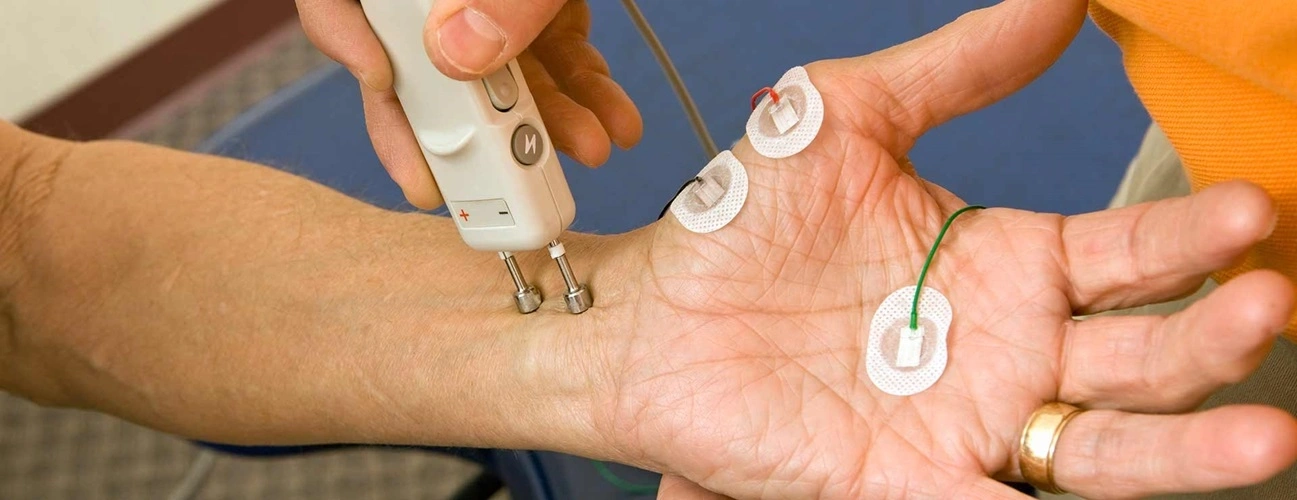
- Step 2: Electrode Placement Surface electrodes are placed on the skin over specific nerves.
- Step 3: Electrical Stimulation Mild electrical impulses are delivered to stimulate the nerve.
- Step 4: Signal Recording Response signals are recorded to measure conduction speed and strength.
- Step 5: Data Analysis Neurologist analyzes nerve response patterns.
- Step 6: Reporting Results are documented and explained to the patient.
Benefits & Value
For Patients
Accurate diagnosis of nerve-related conditions
Helps identify cause of numbness, tingling, or weakness
Minimally invasive and quick procedure
For Caregivers & Families
Early detection of nerve damage
Supports timely medical intervention
Helps monitor progression of neurological conditions
For the Community
Promotes early diagnosis of neurological disorders
Reduces long-term disability from untreated nerve conditions
Supports awareness of nerve health and diabetes complications
Risks & Challenges
Mild discomfort during electrical stimulation
No major risks or complications
Slight discomfort may affect patient cooperation
Requires expert interpretation for accurate diagnosis
Frequently Asked Questions
Is the NCS test available at Nano Hospitals in BG Road and Uttarahalli, Bengaluru? +
Yes, Nerve Conduction Study (NCS) testing is fully available at Nano Hospitals across both BG Road and Uttarahalli branches in Bengaluru. Our neurodiagnostic departments are equipped with advanced electromyography (EMG) and nerve conduction apparatus to evaluate peripheral nerve damage, radiculopathies, and neuromuscular disorders under expert neurological supervision.
What is a Nerve Conduction Study (NCS) and how does it work? +
A Nerve Conduction Study (NCS) is a non-invasive neurodiagnostic test that measures the speed and electrical signal strength traveling through peripheral nerves. At Nano Hospitals Bangalore, neurologists use mild electrical pulses applied via surface electrodes to diagnose nerve compression, demyelination, axonal degeneration, and peripheral neuropathies.
When is a Nerve Conduction Study (NCS) recommended by neurologists? +
A Nerve Conduction Study (NCS) is recommended when patients exhibit chronic numbness, tingling sensations, localized muscle weakness, burning nerve pain, or unexplained loss of reflexes. Neurologists at Nano Hospitals Bangalore order NCS to differentiate between localized nerve entrapments, generalized peripheral neuropathy, spinal nerve root compression, and motor neuron diseases.
What is the cost of an NCS test in Bengaluru at Nano Hospitals? +
The cost of an NCS test at Nano Hospitals Bangalore generally ranges from ₹2,000 to ₹5,500, depending on whether single-limb, upper and lower limb, or combined EMG-NCS protocols are required. Nano Hospitals offers transparent, affordable neurodiagnostic pricing across both BG Road and Uttarahalli branches without compromising clinical quality.
How long does a Nerve Conduction Study (NCS) take at Nano Hospitals? +
A typical Nerve Conduction Study (NCS) at Nano Hospitals Bangalore takes 30 to 60 minutes to complete. The exact duration depends on the number of sensory and motor nerves evaluated, whether both upper and lower extremities are tested, and if a companion Electromyogram (EMG) is performed concurrently.
Is an NCS test painful or uncomfortable for the patient? +
An NCS test is safe and generally well-tolerated, causing only mild, temporary discomfort. Patients feel brief, tiny electrical pulses similar to a minor static shock or quick tapping sensation as electrodes stimulate peripheral nerves. At Nano Hospitals Bangalore, technicians adjust stimulation intensity to maintain patient comfort throughout testing.
Do I need any special preparation before undergoing an NCS test? +
Minimal preparation is needed for an NCS test at Nano Hospitals Bangalore. Patients should keep skin clean and free of oils, lotions, or moisturizers on testing day, wear loose-fitting clothing, and inform technicians about pacemakers, cardiac defibrillators, or blood-thinning medications prior to starting the procedure.
Can an NCS test accurately detect nerve damage and entrapment syndromes? +
Yes, Nerve Conduction Studies provide highly accurate, quantitative measurements of nerve velocity and amplitude. Specialists at Nano Hospitals Bangalore utilize precision NCS to pinpoint exact sites of nerve compression, distinguish between axonal and demyelinating injury, and confirm clinical diagnoses such as Carpal Tunnel Syndrome and sciatica.
How quickly are NCS test reports available at Nano Hospitals? +
Official NCS diagnostic reports at Nano Hospitals Bangalore are typically delivered within 24 to 48 hours following test completion. Experienced consultant neurologists meticulously analyze nerve latency, amplitude, and conduction velocity parameters to generate comprehensive digital and physical reports for immediate physician consultation.
Is an NCS test safe for all patients, and are there side effects? +
Yes, an NCS test is exceptionally safe with virtually no lasting side effects. The electrical stimulation used at Nano Hospitals Bangalore is extremely low-voltage and brief, posing no risk of tissue injury or systemic complications, even for elderly patients, children, or individuals with complex medical conditions.
Can an NCS test detect diabetic neuropathy in patients with diabetes? +
Yes, an NCS test is the gold standard diagnostic tool for detecting diabetic peripheral neuropathy. At Nano Hospitals Bangalore, neurologists use detailed nerve conduction velocity assessments to identify early diabetic nerve impairment in feet and hands, enabling prompt therapeutic intervention to prevent ulceration and progressive nerve damage.
Is emergency or same-day NCS testing available at Nano Hospitals? +
While Nerve Conduction Studies are typically elective scheduled outpatient procedures, Nano Hospitals Bangalore accommodates urgent or same-day NCS testing for acute neurological presentations, such as rapid-onset Guillain-Barré syndrome, acute severe nerve compression, or traumatic peripheral nerve injuries requiring urgent specialist evaluation.
Why choose Nano Hospitals for an NCS test in Bengaluru? +
Nano Hospitals Bangalore combines state-of-the-art neurodiagnostic equipment, board-certified neurologists, affordable pricing, and rapid reporting across convenient BG Road and Uttarahalli branches. Our dedicated neuro-physiology lab ensures meticulous test execution, precise nerve latency analysis, and seamless integration with patient treatment plans.
Can I walk in for an NCS test or is a prior appointment required? +
Prior appointments are strongly recommended for NCS testing at Nano Hospitals Bangalore to ensure minimal wait times and proper lab preparation. However, walk-in patients are accommodated based on neuro-physiology lab availability, particularly for urgent physician-referred diagnostic workups across BG Road and Uttarahalli locations.
What happens after an NCS test is completed at Nano Hospitals? +
After completing an NCS test at Nano Hospitals Bangalore, patients immediately resume normal activities without restrictions. Once the neurologist interprets raw nerve signal data, a formal consultation is scheduled to discuss findings and outline tailored medical, rehabilitative, or surgical management plans for nerve recovery.
Can we book an appointment for NCS at Nano Hospitals? +