




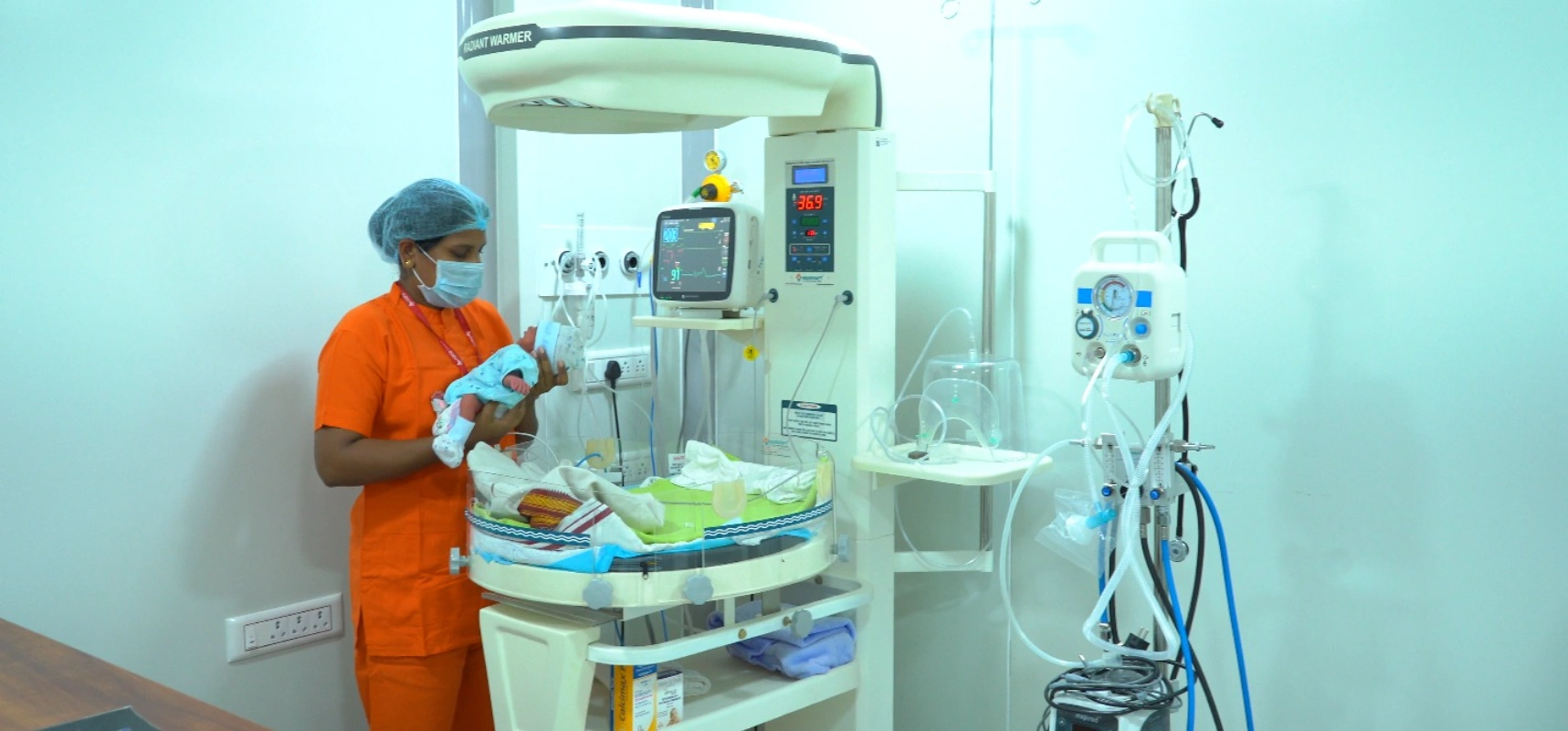
NICU
About NICU
The Neonatal Intensive Care Unit (NICU) is a specialized department dedicated to the care of premature, low-birth-weight, and critically ill newborns who require advanced medical support immediately after birth.
NICU care combines specialized neonatal doctors, trained nurses, advanced incubators, and life-support systems to ensure newborns receive the safest and most comprehensive care during their early days of life.
Overview
- Provides advanced care for premature and low-birth-weight babies
- Supports newborns with breathing difficulties or infections
- Manages congenital conditions and birth complications
- Provides temperature-controlled incubator care
- Monitors vital signs such as heart rate, oxygen levels, and breathing
Workflow
- Step 1: Admission & Initial Assessment Newborns requiring specialized care are admitted from the Labour Room, Operation Theatre, or referral centers. A detailed assessment of breathing, heart rate, weight, and overall condition is performed.
- Step 2: Stabilisation & Immediate Care Doctors initiate immediate interventions such as oxygen therapy, temperature regulation in incubators, intravenous fluids, and medications if required.
- Step 3: Continuous Monitoring Advanced neonatal monitors track the baby’s heart rate, oxygen saturation, breathing pattern, and body temperature.
- Step 4: Specialized Neonatal Treatment Treatment may include respiratory support, phototherapy for jaundice, infection management, and nutritional support through feeding tubes if necessary.
- Step 5: Developmental & Nutritional Care NICU teams ensure proper nutrition, growth monitoring, and developmental support to help the baby gain strength.
- Step 6: Recovery & Discharge Planning Once the newborn is stable, feeding well, and maintaining body temperature independently, the baby is prepared for safe discharge with parental guidance.
Benefits & Value
For Patients
Rapid pain relief
Reduced swelling and inflammation
Faster recovery after injury or surgery
For Caregivers & Families
Helps manage post-surgical care effectively
Reduces need for pain medications
Supports quicker patient recovery
For the Community
Promotes effective injury management
Reduces complications from untreated inflammation
Encourages sports injury rehabilitation awareness
Risks & Challenges
- Strict infection control protocols are followed
- Babies are monitored 24/7 by specialized NICU staff
- Some newborns may require extended stay for growth and monitoring
- Parents receive education on newborn care before discharge
Frequently Asked Questions
Which newborns require admission to the Neonatal Intensive Care Unit (NICU) at Nano Hospitals? +
Newborns requiring NICU admission include premature infants born before 37 weeks, low-birth-weight babies (under 2.5 kg), infants with respiratory distress syndrome, neonatal sepsis, severe jaundice, hypoglycemia, or birth asphyxia. At Nano Hospitals Bangalore, specialized Level III NICU facilities provide immediate, advanced life support for complex neonatal conditions.
Can parents visit their baby in the NICU, and what infection control protocols are followed? +
Yes, parents can visit their newborn in the NICU at Nano Hospitals Bangalore under structured, infection-controlled protocols. We actively encourage mother-infant bonding through skin-to-skin contact (Kangaroo Mother Care) and assisted breastfeeding while enforcing strict hand hygiene, surgical gowning, and controlled visitation windows to protect vulnerable infants.
How long do newborns typically stay in the Neonatal Intensive Care Unit (NICU)? +
A newborn's stay in the NICU at Nano Hospitals Bangalore ranges from a few days for mild jaundice or transient tachypnea to several weeks or months for extremely premature or low-birth-weight infants. Discharge occurs once the baby achieves stable body temperature, independent breathing, and consistent oral feeding.
Is Level III NICU care safe for newborns, and how are critical babies monitored? +
Yes, Level III NICU care at Nano Hospitals Bangalore is exceptionally safe and operates under strict clinical protocols. Critically ill newborns receive 24/7 continuous physiological monitoring, advanced thermal incubation, gentle mechanical ventilation or CPAP support, and one-on-one nursing care directed by experienced, board-certified consultant neonatologists.
What post-discharge care, follow-up, and support are provided after leaving the NICU? +
Following NICU discharge at Nano Hospitals Bangalore, parents receive detailed discharge plans, home feeding guidelines, medication schedules, and hygiene protocols. Outpatient follow-up visits monitor growth velocity, neurodevelopmental milestones, vision and hearing screening, and routine pediatric immunizations to ensure long-term healthy infant development.
How can parents contact or access NICU care services at Nano Hospitals, Bangalore? +
Parents and referring physicians can access emergency NICU care services at Nano Hospitals Bangalore 24/7 online via nanohospitals.in/health-facilities/nicu, by direct telephone helpline, or at emergency desks across Bannerghatta Road and Uttarahalli campuses for immediate specialist transfer and admission.
Can we book an appointment for NICU services at Nano Hospitals? +
Yes. NICU care at Nano Hospitals Bangalore is provided based on the newborn's medical needs and admission requirements. For neonatal consultations and NICU-related services, you can book by calling the hospital, through the online option at nicu, or by visiting the hospital reception desk.