




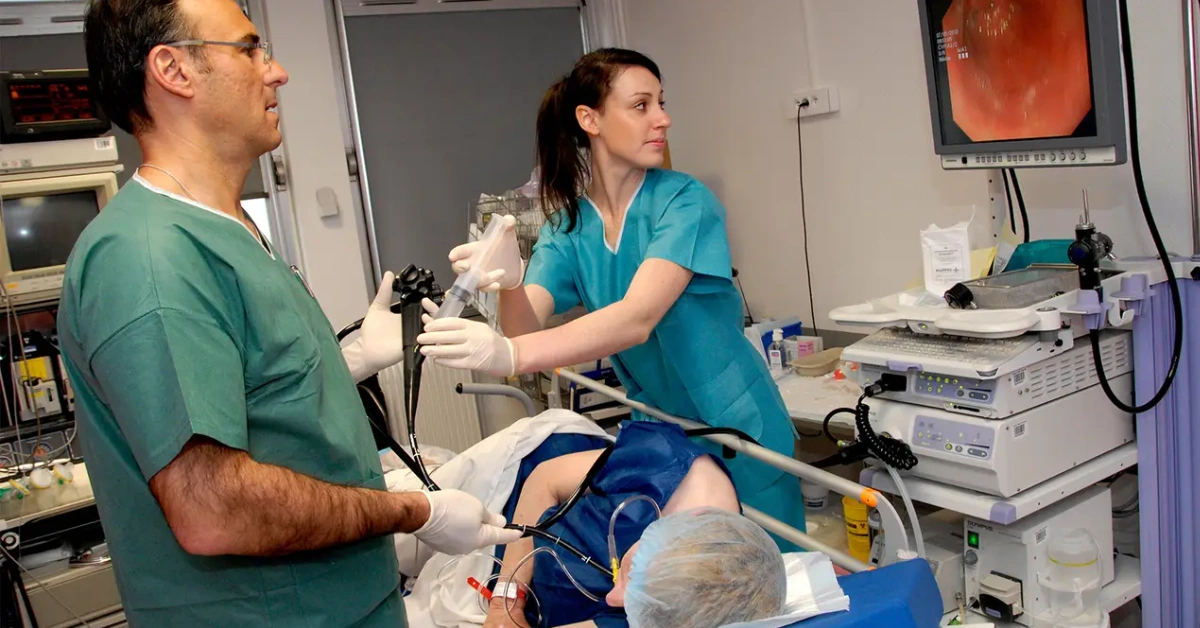
Colonoscopy
Nano Hospitals offers colonoscopy in Bangalore, a minimally invasive 20-40 minute endoscopic procedure to detect colorectal cancer, polyps and inflammatory bowel disease, with same-session biopsy and polyp removal available. Performed by experienced gastroenterologists under sedation, it is available at both Bannerghatta Road and Uttarahalli branches.
About Colonoscopy
Colonoscopy is an advanced endoscopic procedure used to examine the inner lining of the large intestine (colon and rectum). It helps detect polyps, inflammation, ulcers, bleeding sources, and colorectal cancer.
The procedure is minimally invasive and performed using a flexible camera-equipped instrument called a colonoscope.
Overview
Detects colorectal cancer and precancerous polyps
Evaluates chronic abdominal pain, diarrhea, or rectal bleeding
Assesses inflammatory bowel disease (IBD) such as ulcerative colitis and Crohn’s disease
Screens individuals above 45 years or those with a family history of colorectal cancer
Allows biopsy and polyp removal during the same procedure
Workflow
- Step 1: Bowel Preparation Patient undergoes prescribed bowel cleansing to clear the colon.
- Step 2: Sedation Mild sedation is administered for comfort.
- Step 3: Scope Insertion A flexible colonoscope is gently inserted through the rectum.
- Step 4: Visual Examination High-definition camera transmits images of the colon lining.
- Step 5: Biopsy / Polypectomy (If Required) Suspicious tissue or polyps are removed for laboratory analysis.
- Step 6: Reporting Findings are documented and discussed with the patient.
Benefits & Value
For Patients
Early detection of colorectal cancer
Removal of polyps before they turn cancerous
Minimally invasive with quick recovery
For Caregivers & Families
Preventive screening reduces long-term complications
Timely identification of serious gastrointestinal disorders
Clear treatment planning based on direct visualization
For the Community
Promotes preventive cancer screening
Reduces colorectal cancer mortality
Enhances awareness about digestive health
Risks & Challenges
Mild abdominal discomfort or bloating
Rare risk of bleeding (especially after polyp removal)
Very rare risk of bowel perforation
Requires proper bowel preparation for accurate results
Patient hesitation due to fear or misinformation
Interpretation may require biopsy confirmation
Frequently Asked Questions
Is a diagnostic Colonoscopy procedure painful, and what sedation is provided? +
No, a diagnostic colonoscopy is not painful because it is performed under intravenous conscious sedation or mild general anesthesia. At Nano Hospitals Bangalore, experienced anesthetists ensure patients remain completely relaxed, comfortable, and sleep peacefully during the procedure without experiencing significant physical pain or abdominal cramping.
How long does a Colonoscopy procedure take at Nano Hospitals, Bangalore? +
A standard diagnostic or therapeutic colonoscopy at Nano Hospitals Bangalore typically takes 20 to 40 minutes to complete. However, patients should plan for 2 to 3 hours total hospital stay to include pre-procedure prep, IV sedation administration, and post-endoscopy day-care recovery monitoring.
What dietary bowel preparation and fasting guidelines are required before a colonoscopy? +
Thorough bowel preparation is essential for clear visualization of the colonic lining. Patients must follow a low-fiber diet 2 days prior, switch to clear liquids, take prescribed oral laxative bowel prep solutions the day before, and maintain strict fasting for 6 to 8 hours before the procedure.
Can colon polyps be removed and tissue biopsies performed during the same colonoscopy session? +
Yes, colon polyps can be safely removed via painless endoscopic polypectomy during the same colonoscopy session at Nano Hospitals Bangalore. Gastroenterologists also collect tissue mucosal biopsies for histopathology analysis to screen for colorectal cancer, inflammatory bowel disease (IBD), infections, or chronic colitis without requiring surgery.
Is a Colonoscopy safe for elderly patients, and what monitoring protocols are used? +
Yes, Colonoscopy is safe for elderly patients when conducted by expert Gastroenterologists at Nano Hospitals Bangalore. Senior citizens undergo thorough pre-procedure cardiac and respiratory evaluations, with continuous intra-procedural blood pressure, pulse oximetry, and electrocardiography monitoring to ensure maximum clinical safety and gentle sedation delivery.
How to book a Diagnostic Colonoscopy or Gastroenterology consultation at Nano Hospitals, Bangalore? +
Diagnostic Colonoscopy procedures and gastroenterology consultations at Nano Hospitals Bangalore can be scheduled online via colonoscopy or by calling the hospital. Patients can also visit the hospital reception desk to book an appointment. Please call Nano Hospitals before visiting to confirm availability, appointment timings, and procedure requirements.