




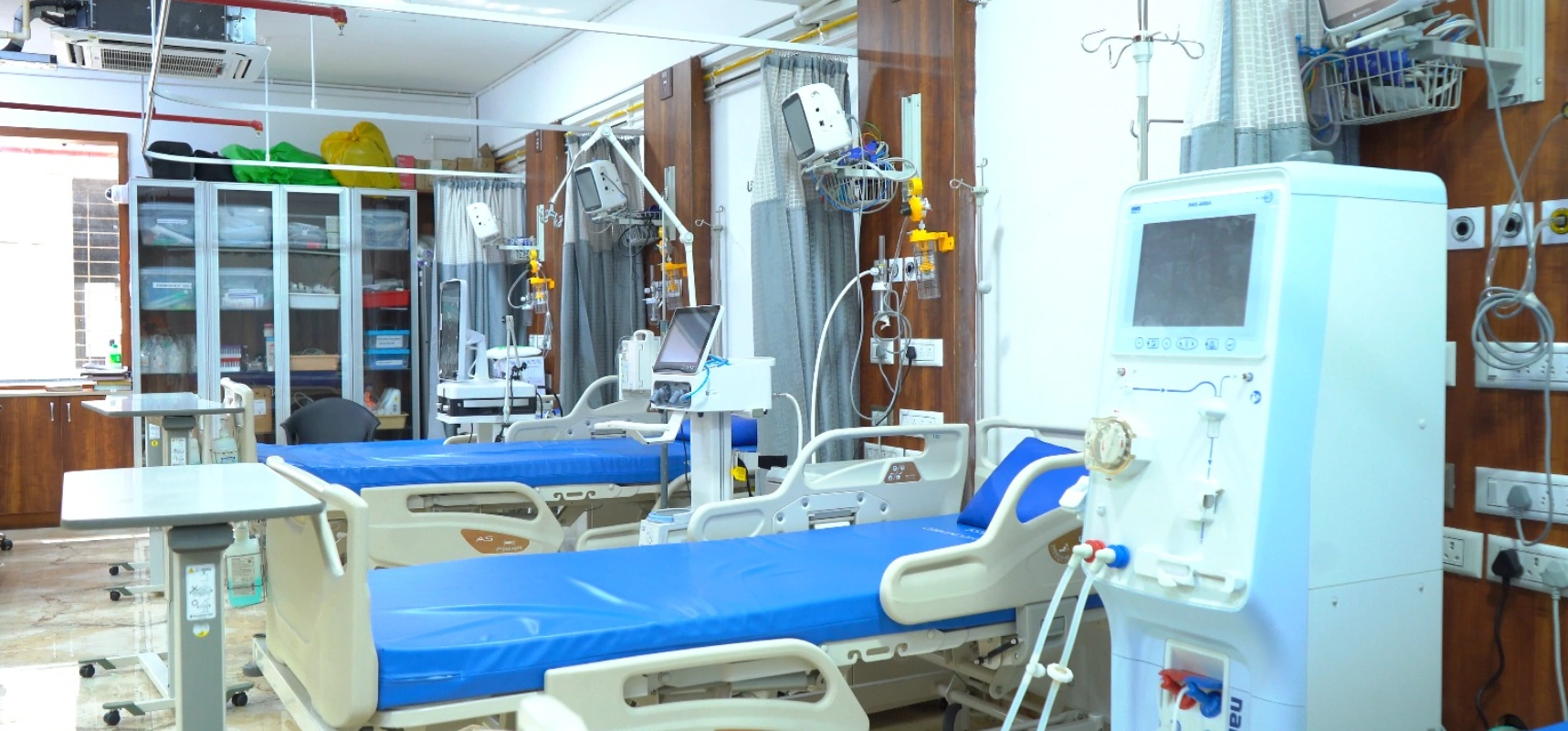
ICU
Nano Hospitals provides 24x7 ICU and critical care in Bangalore for life-threatening conditions like respiratory failure, septic shock, heart attack and stroke, with continuous monitoring and advanced life support. Care is led by intensivists and critical care nurses, available at both Bannerghatta Road and Uttarahalli branches.
About ICU
The Intensive Care Unit (ICU) is a specialized hospital department designed to provide continuous monitoring, advanced life support, and critical care treatment for patients with life-threatening conditions.
ICU care involves highly trained doctors, specialized nurses, advanced monitoring systems, and life-support technologies to stabilize and treat critically ill patients.
Overview
- Provides 24/7 monitoring of critically ill patients
- Supports vital organ functions such as breathing, heart activity, and blood circulation
- Manages severe infections, trauma, and organ failure
- Provides care for patients after major surgeries
- Stabilizes patients from medical emergencies like cardiac arrest or stroke
Workflow
- Step 1: Admission & Risk Assessment Patients are admitted based on severity and clinical need, often from the Emergency Department, Operation Theatres, or other hospital units.
- Step 2: Stabilisation & Life Support Immediate interventions may include ventilatory support, intravenous medications, fluid therapy, and emergency stabilization procedures.
- Step 3: Continuous Monitoring Advanced monitoring systems track vital parameters such as heart rate, blood pressure, oxygen levels, and organ function.
- Step 4: Critical Care Treatment Specialized treatments are provided for conditions such as severe infections, respiratory failure, cardiac complications, or organ dysfunction.
- Step 5: Multidisciplinary Care A team of intensivists, nurses, physiotherapists, and specialists collaborate to ensure comprehensive treatment and recovery.
- Step 6: Recovery & Step-Down Care Once the patient's condition stabilizes, they may be shifted to a step-down unit or general ward for further recovery.
Benefits & Value
For Patients
Rapid pain relief
Reduced swelling and inflammation
Faster recovery after injury or surgery
For Caregivers & Families
Helps manage post-surgical care effectively
Reduces need for pain medications
Supports quicker patient recovery
For the Community
Promotes effective injury management
Reduces complications from untreated inflammation
Encourages sports injury rehabilitation awareness
Risks & Challenges
- ICU care requires continuous monitoring and specialized staff
- Strict infection control protocols are maintained
- Advanced equipment requires trained medical supervision
- Patient recovery may require gradual step-down care
Frequently Asked Questions
What critical medical conditions require admission to the Intensive Care Unit (ICU)? +
Intensive Care Unit (ICU) admission at Nano Hospitals Bangalore is required for severe, life-threatening medical conditions. These include acute respiratory distress syndrome, septic shock, acute myocardial infarction (heart attack), severe traumatic injuries, ischemic or hemorrhagic stroke, major surgical monitoring, and acute multi-organ dysfunction requiring specialized organ support.
How are patients monitored continuously in the Intensive Care Unit at Nano Hospitals? +
Patients in the ICU at Nano Hospitals Bangalore receive 24/7 continuous multiparameter monitoring led by experienced critical care intensivists and dedicated ICU nurses. Advanced telemetry equipment continuously tracks vital signs, blood oxygenation, cardiac rhythms, arterial blood pressure, and neurological function, enabling immediate intervention during sudden physiological shifts.
What are the visiting hours and infection control guidelines for ICU patients' families? +
Family visiting hours at Nano Hospitals Bangalore ICUs are strictly managed to protect critically ill patients from infections and ensure adequate rest. Visiting is permitted during designated morning and evening slots, limited to immediate family members who must follow strict hand hygiene and wear protective sanitization attire.
How long do patients typically remain in the Intensive Care Unit for recovery? +
The length of stay in the ICU at Nano Hospitals Bangalore varies based on disease severity, underlying health, and treatment response. Post-surgical patients may require 24 to 48 hours of observation, whereas complex cases of severe sepsis or respiratory failure may necessitate intensive critical care for several weeks.
What care transitions occur after a patient is stabilized and discharged from the ICU? +
Once stabilized and successfully weaned off organ support, patients at Nano Hospitals Bangalore transition from the ICU to a High Dependency Unit (HDU) or step-down ward. Specialized medical teams provide ongoing monitoring, medication management, physical therapy, and respiratory rehabilitation before transferring the patient to a regular ward.
How to access emergency ICU admission or critical care consultations at Nano Hospitals, Bangalore? +
Yes. ICU services at Nano Hospitals Bangalore are available 24×7. Patients can access ICU and critical care services through icu, by calling the hospital, or by visiting the hospital reception or emergency department. For emergencies, patients can access 24×7 emergency care without a prior appointment.