




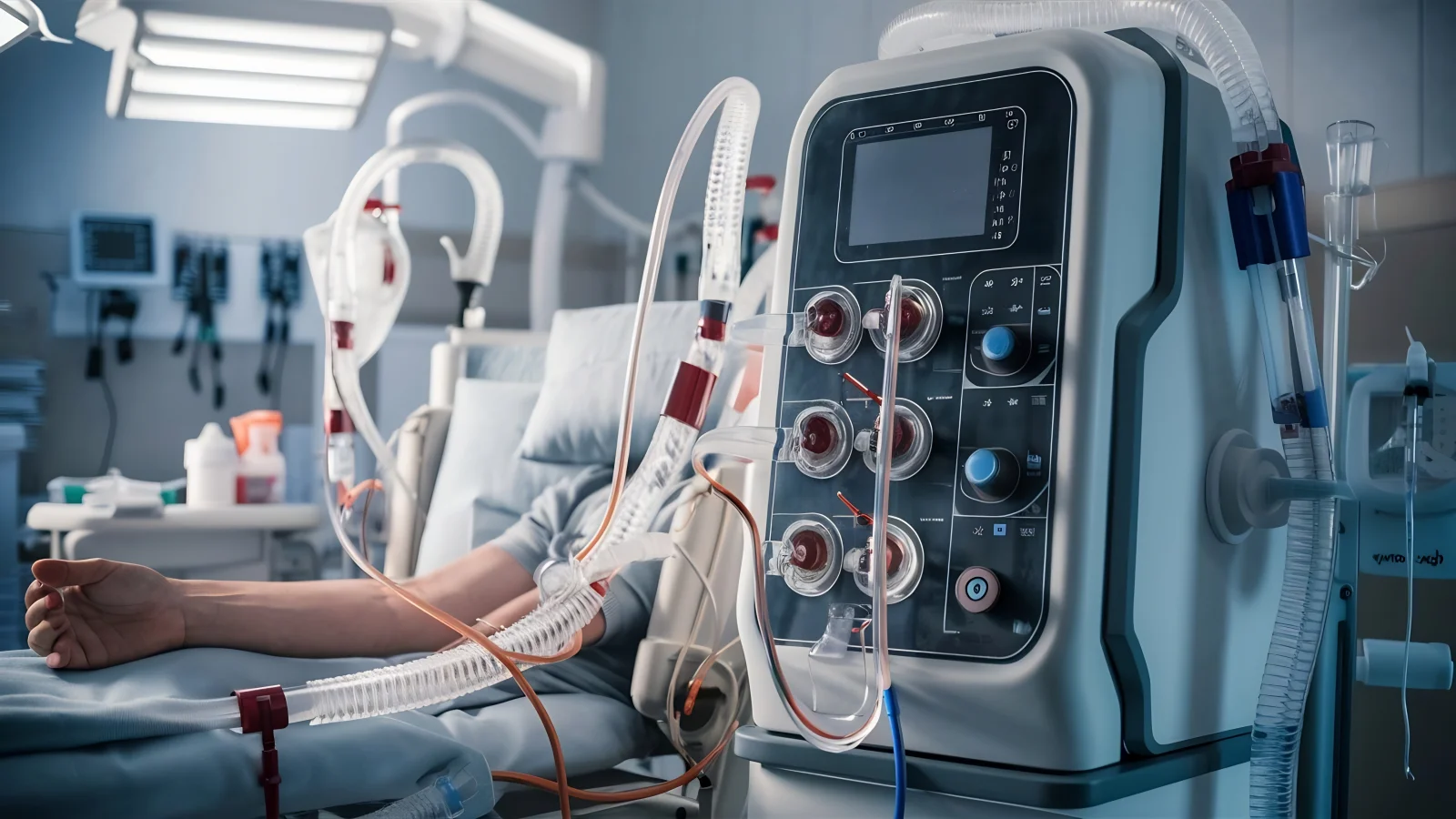
Dialysis Treatment
About Dialysis Treatment
Dialysis is a life-saving treatment for individuals whose kidneys have lost the ability to properly filter waste products and excess fluids from the blood. Hemodialysis is the most common type of dialysis, where blood is passed through a special filter called a dialyzer that removes toxins and excess water before returning the purified blood to the body.
Overview
Dialysis helps maintain a balance of essential minerals such as potassium and sodium in the blood and prevents the buildup of harmful waste substances. It is commonly used for patients with advanced chronic kidney disease or kidney failure. While dialysis does not cure kidney disease, it plays a vital role in supporting the body's functions and improving patient survival.
Understanding The Procedure
Symptoms That May Require Dialysis Treatment
- ⦾ Chest pain or pressure
- ⦾ Shortness of breath
- ⦾ Fatigue during activity
- ⦾ Heart attack symptoms
Recovery & Outlook
Dialysis helps patients maintain stable health when kidney function is severely reduced. With regular dialysis sessions and proper medical care, many individuals can continue their daily routines and live for many years.
Risks
- ⦾ Low blood pressure during dialysis
- ⦾ Muscle cramps
- ⦾ Infection at the access site
Post-Operative Care
- ⦾ Keep the dialysis access site clean and dry
- ⦾ Avoid heavy lifting with the access arm
- ⦾ Follow the recommended diet and fluid restrictions
- ⦾ Take prescribed medications regularly
- ⦾ Monitor the access site for redness, swelling, or pain
Doctors Who Perform Dialysis Treatment
Meet experienced nephrology doctors who regularly evaluate and perform dialysis treatment .

Dr. Krithika D Muralidhar
MBBS, MD, MRCP (London), DNB (Nephrology)
KMC: 83201
Consultant Nephrologist

Dr Harsha Kumar
MBBS, MD (INTERNAL MEDICINE)(NEPHROLOGY PGI)
KMC: 76636
Consultant Nephrologist And Transplant Surgeon
Prefer WhatsApp for Dialysis Treatment enquiries? Chat with our orthopedic team during working hours for quick assistance.