




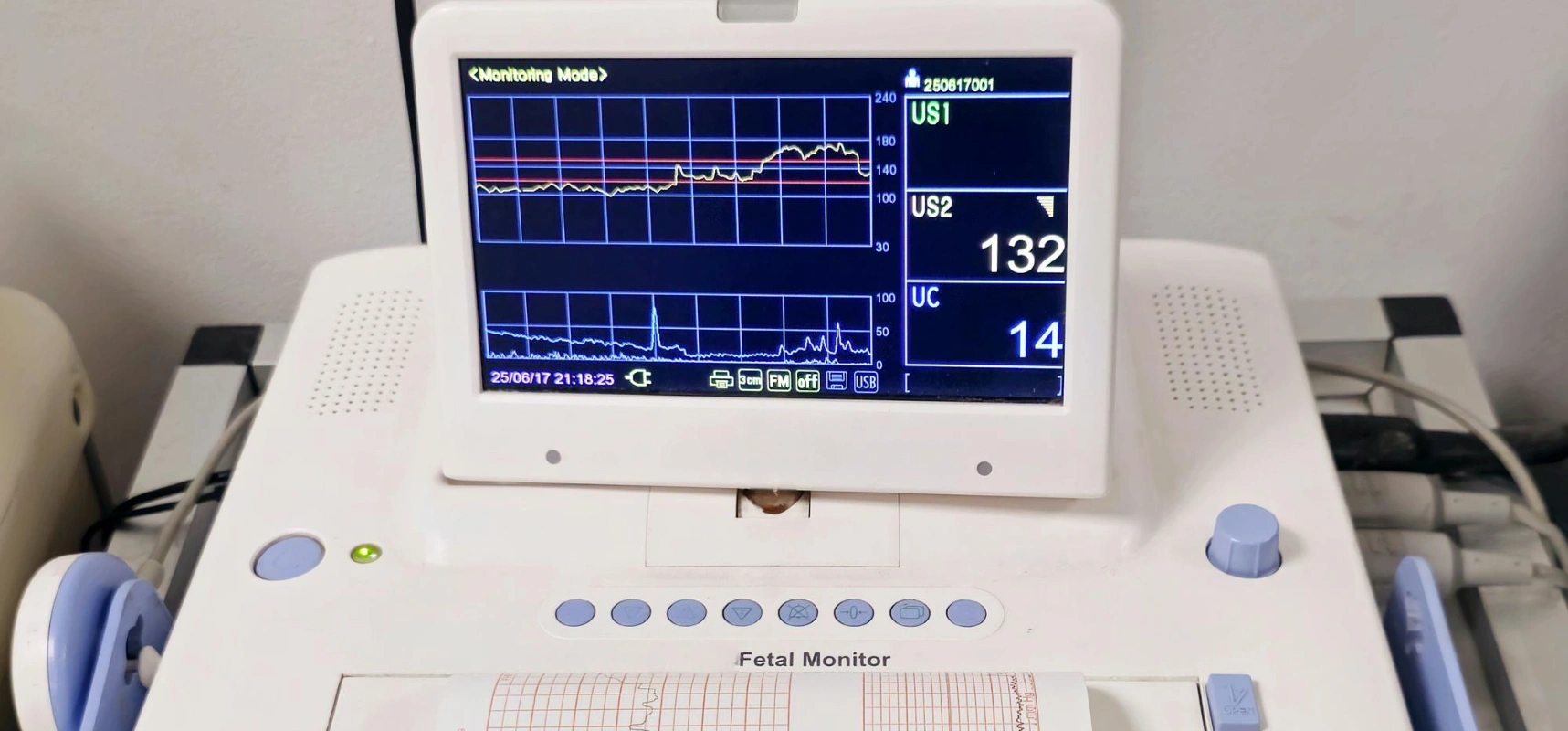
Non-Stress Test (NST)
Nano Hospitals provides Non-Stress Test (NST) services in Bangalore to monitor fetal heart rate and its response to movements. NST is a non-invasive prenatal test used to assess fetal well-being, particularly in high-risk pregnancies.
About Non-Stress Test (NST)
Non-Stress Test (NST) is a non-invasive prenatal test used to monitor fetal heart rate and its response to movements.
It helps assess the well-being of the fetus, especially in high-risk pregnancies. The test measures whether the baby’s heart rate increases appropriately with movement, indicating adequate oxygen supply.
Overview
Evaluates fetal health and oxygenation
Monitors fetal heart rate in response to movements
Used in high-risk pregnancies (diabetes, hypertension, etc.)
Helps detect fetal distress or compromised conditions
Often performed in late pregnancy or when reduced fetal movements are noted
Workflow
- Step 1: Patient Preparation Mother is positioned comfortably, usually in a semi-reclining position.
- Step 2: Sensor Placement Two belts are placed on the abdomen—one for fetal heart rate and one for uterine activity.
- Step 3: Monitoring Fetal heart rate and movements are recorded over time.
- Step 4: Data Recording Graph (CTG tracing) is generated showing heart rate patterns.
- Step 5: Interpretation Doctor evaluates reactivity and variability of fetal heart rate.
- Step 6: Reporting Results are documented and explained to the patient.
Benefits & Value
For Patients
Non-invasive and painless monitoring
Provides reassurance about baby’s well-being
Early detection of fetal distress
For Caregivers & Families
Immediate information about fetal health
Reduces anxiety in high-risk pregnancies
Supports safe pregnancy management
For the Community
Promotes safe maternal and fetal care
Reduces risk of complications during pregnancy
Encourages routine prenatal monitoring
Risks & Challenges
No significant risks (completely safe for mother and baby)
May require repeat testing if results are inconclusive
Interpretation depends on clinical expertise
Frequently Asked Questions
What is a Non-Stress Test (NST) at Nano Hospitals? +
A Non-Stress Test at Nano Hospitals is a non-invasive test used during pregnancy to monitor the baby's heart rate and movements.
Why is a Non-Stress Test performed? +
An NST helps the medical team assess the baby's well-being by observing how the baby's heart rate responds to movement.
When is an NST recommended? +
Your doctor may recommend an NST during pregnancy when closer monitoring of the baby's well-being is needed, particularly in later stages of pregnancy or certain high-risk pregnancies.
How is a Non-Stress Test performed at Nano Hospitals? +
Sensors are placed on the mother's abdomen to monitor the baby's heart rate and uterine activity while the baby is being observed for movements.
Is a Non-Stress Test safe for the baby? +
Yes. An NST is a non-invasive monitoring test and does not expose the mother or baby to X-ray radiation.
Is an NST painful? +
No. An NST is generally painless. The sensors are placed externally on the mother's abdomen during the test.
How long does a Non-Stress Test take? +
An NST generally takes around 20–40 minutes, although the duration may vary depending on the baby's activity and the doctor's assessment.
Do I need to prepare before an NST at Nano Hospitals? +
Usually, no special preparation is required. Your doctor or the Nano Hospitals maternity team may provide specific instructions based on your pregnancy.
What does an NST result indicate? +
The test helps the doctor assess the baby's heart rate pattern and response to movement and determine whether additional monitoring or evaluation may be needed.
Can we book an appointment for a Non-Stress Test at Nano Hospitals? +
Yes. Non-Stress Test (NST) services at Nano Hospitals Bangalore are available by appointment. You can schedule your NST through non stress test, by calling the hospital, or by visiting the hospital reception desk