




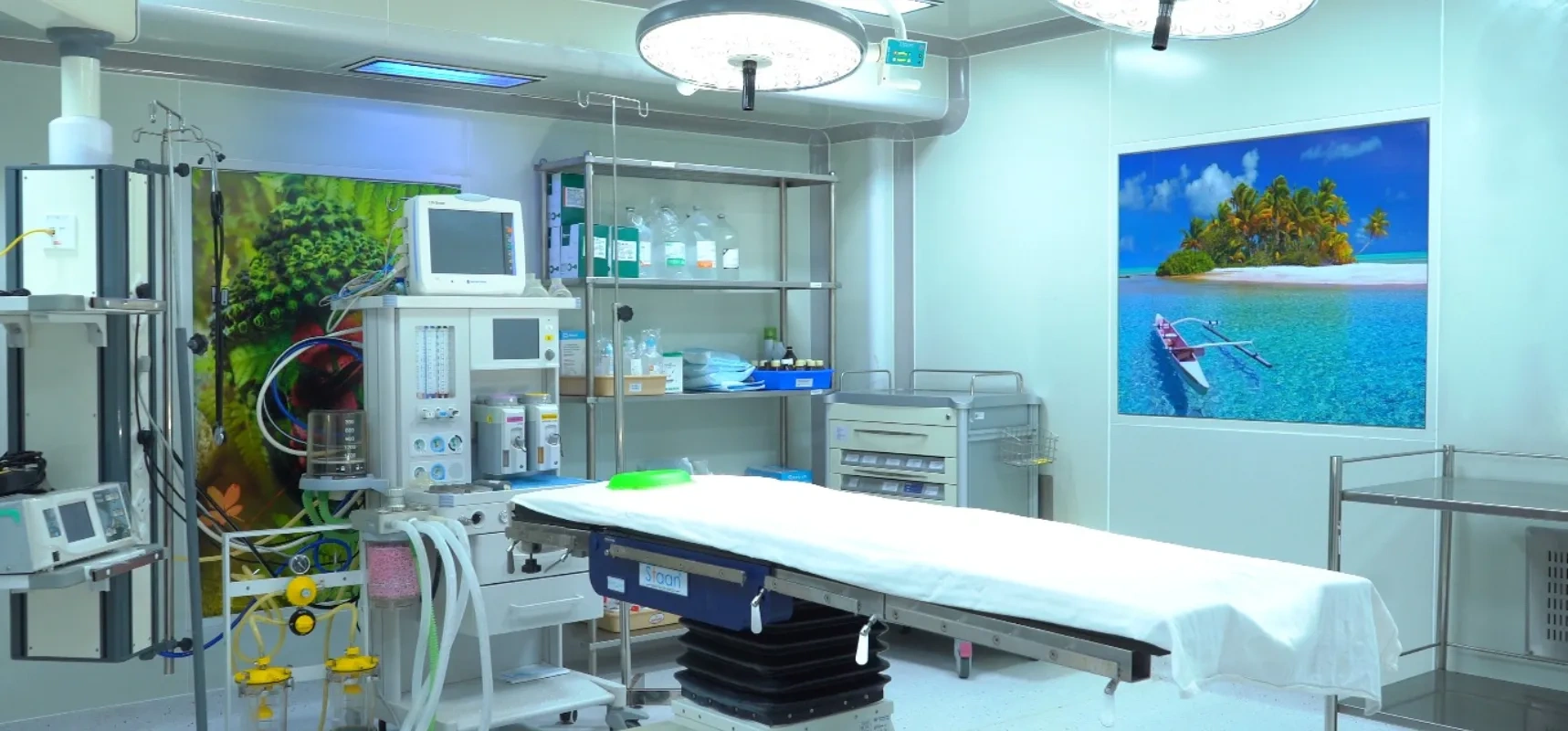
Urology OT
About Urology OT
Urology Operation Theatre (OT) Services at Nano Hospitals are dedicated surgical facilities designed for the diagnosis and treatment of conditions affecting the urinary tract and male reproductive system. Equipped with advanced endoscopic and minimally invasive technology, the Urology OT enables precise surgical care for kidney stones, prostate disorders, bladder conditions, urinary obstruction, and urological cancers.
These specialized operation theatres support both routine and emergency urological procedures with a strong focus on safety, accuracy, and faster patient recovery.
Overview
A Urology OT is a specialized surgical environment equipped for advanced urological procedures involving the kidneys, ureters, bladder, prostate, and urethra. It supports both minimally invasive endoscopic procedures and open or laparoscopic surgeries.
At Nano Hospitals, the Urology OT is designed with modern imaging systems, endoscopic towers, and laser technology to manage complex urinary tract conditions safely and effectively.
Workflow
- Step 1: Pre-Surgical Evaluation Patients undergo diagnostic imaging, lab tests, and clinical evaluation by a urologist to determine the appropriate surgical approach.
- Step 2: Anesthesia and Preparation Depending on the procedure, regional or general anesthesia is administered. Sterile protocols are followed to prepare the surgical area.
- Step 3: Image-Guided or Endoscopic Surgery Minimally invasive tools such as cystoscopes, ureteroscopes, or laparoscopic instruments are used to access and treat the affected area.
- Step 4: Precision Treatment Procedures may include stone removal, prostate surgery, tumor resection, stent placement, or correction of urinary blockages.
- Step 5: Recovery and Monitoring After surgery, patients are shifted to recovery or ICU (if needed) for monitoring before discharge or further care.
Benefits & Value
For Patients
- Minimally invasive surgeries with less pain
- Shorter hospital stays and quicker recovery
- Precise treatment for stones, prostate issues, and tumors
For Doctors
- Advanced visualization for delicate urological structures
- Ability to perform complex procedures safely
- Better surgical outcomes with modern equipment
For the Community
- Access to advanced urological surgery locally
- Reduced need for referral to distant centers
- Improved management of urinary tract diseases
Risks & Challenges
- Risk of bleeding or infection after surgery
- Possible urinary discomfort during recovery
- Anesthesia-related risks in high-risk patients
- Need for careful post-operative monitoring
Frequently Asked Questions
Are urological surgeries minimally invasive at Nano Hospitals Urology OT? +
Yes, the majority of urological surgeries at Nano Hospitals Bangalore are performed using advanced minimally invasive techniques. Our dedicated Urology Operation Theatre (OT) is equipped with high-definition endoscopes, laparoscopes, and surgical lasers, allowing surgeons to perform keyhole or scarless procedures that reduce recovery time and post-operative pain.
How long is the post-operative hospital stay after urological surgery? +
The length of hospital stay at Nano Hospitals Bangalore varies by procedure. Minor endoscopic treatments like ureteroscopy (URS) or laser lithotripsy are typically managed as day-care or 24-hour admissions, whereas major laparoscopic kidney surgeries or prostate resections may require a short 2-to-3-day stay for optimal recovery.
Is laser lithotripsy treatment available for kidney and ureteric stones in the Urology OT? +
Yes, advanced laser lithotripsy is routinely available in the Urology OT at Nano Hospitals Bangalore. Using state-of-the-art Holmium laser systems paired with flexible ureteroscopes (RIRS) or mini-PCNL equipment, urologists precisely vaporize and fragment large kidney and ureteric stones into dust, ensuring minimal bleeding and rapid clearance.
Are urological surgeries safe for elderly senior patients with chronic conditions? +
Yes, urological procedures at Nano Hospitals Bangalore are exceptionally safe for elderly patients. Senior candidates undergo thorough pre-anesthetic clearance, cardiac risk stratification, and renal evaluation, while dedicated cardiac anesthesiologists provide continuous intraoperative vital sign monitoring inside our modular Urology OT during minimally invasive endoscopic or laser operations.
Is 24/7 emergency urological surgery available at Nano Hospitals, Bangalore? +
Yes, Nano Hospitals Bangalore provides 24/7 emergency urological surgical services across both Bannerghatta Road and Uttarahalli campuses. Our emergency rooms and modular Urology OTs maintain round-the-clock surgical readiness to treat acute urinary retention, severe kidney stone obstruction, testicular torsion, urological trauma, and intractable hematuria immediately.
How can patients book a urology consultation or surgery at Nano Hospitals, Bangalore? +
Yes. Urology consultations and surgical evaluations at Nano Hospitals Bangalore are available by appointment. You can schedule your appointment through nanohospitals.in/health-facilities/urology-ot, by calling the hospital, or by visiting the hospital reception desk.