




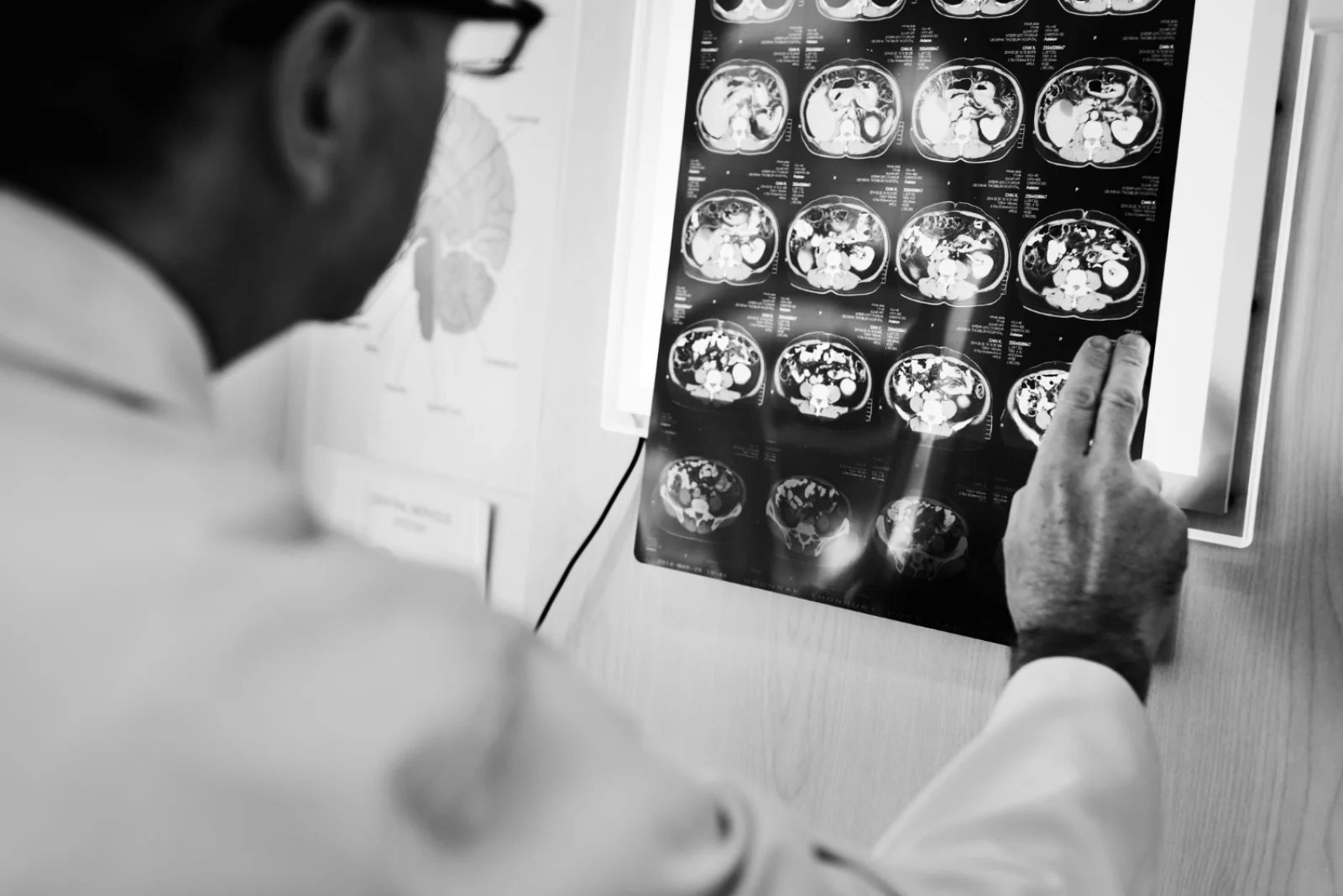
Computed Tomography — CT Brain
About Computed Tomography — CT Brain
CT Brain scanning uses X-rays and computer imaging to evaluate brain structures quickly and accurately.
Overview
CT scans help diagnose head injuries, stroke, bleeding, tumors, infections, and neurological emergencies.
Understanding The Procedure
Symptoms That May Require Computed Tomography — CT Brain
- ⦾ Severe headache
- ⦾ Head injury
- ⦾ Sudden weakness or paralysis
- ⦾ Seizures
- ⦾ Confusion or unconsciousness
Recovery & Outlook
CT Brain scans help rapidly diagnose critical neurological conditions, supporting timely treatment and better recovery.
Risks
- ⦾ Radiation exposure
- ⦾ Allergic reaction to contrast dye
- ⦾ Anxiety during scanning
- ⦾ Kidney stress from contrast in sensitive patients
- ⦾ Rare nausea after contrast injection
Post-Operative Care
- ⦾ Drink adequate fluids after contrast studies
- ⦾ Follow emergency treatment instructions if needed
- ⦾ Monitor for allergic symptoms
- ⦾ Attend neurological follow-up appointments
- ⦾ Resume activities as advised by the doctor
Conclusion
CT Brain imaging is an important diagnostic tool for evaluating neurological emergencies and brain disorders. Early diagnosis and rapid treatment planning improve patient safety and long-term neurological outcomes.
Doctors Who Perform Computed Tomography — CT Brain
Meet experienced neurology (brain care) doctors who regularly evaluate and perform computed tomography — ct brain.

Dr Prahlad S T
MBBS, DNB - General Surgery, DNB - Neurosurgery
KMC: 79627
Consultant Brain (Neuro) & Spine Surgeon

Arun Kumar M A
MBBS, MS General Surgery,DNB General Surgery,MCh Neurosurgery
KMC: 94243
Consultant Neurologist

Dr Kishore R
MBBS, MD, DRNB
KMC: 109264
Consultant Neurologist
Prefer WhatsApp for Computed Tomography — CT Brain enquiries? Chat with our orthopedic team during working hours for quick assistance.