




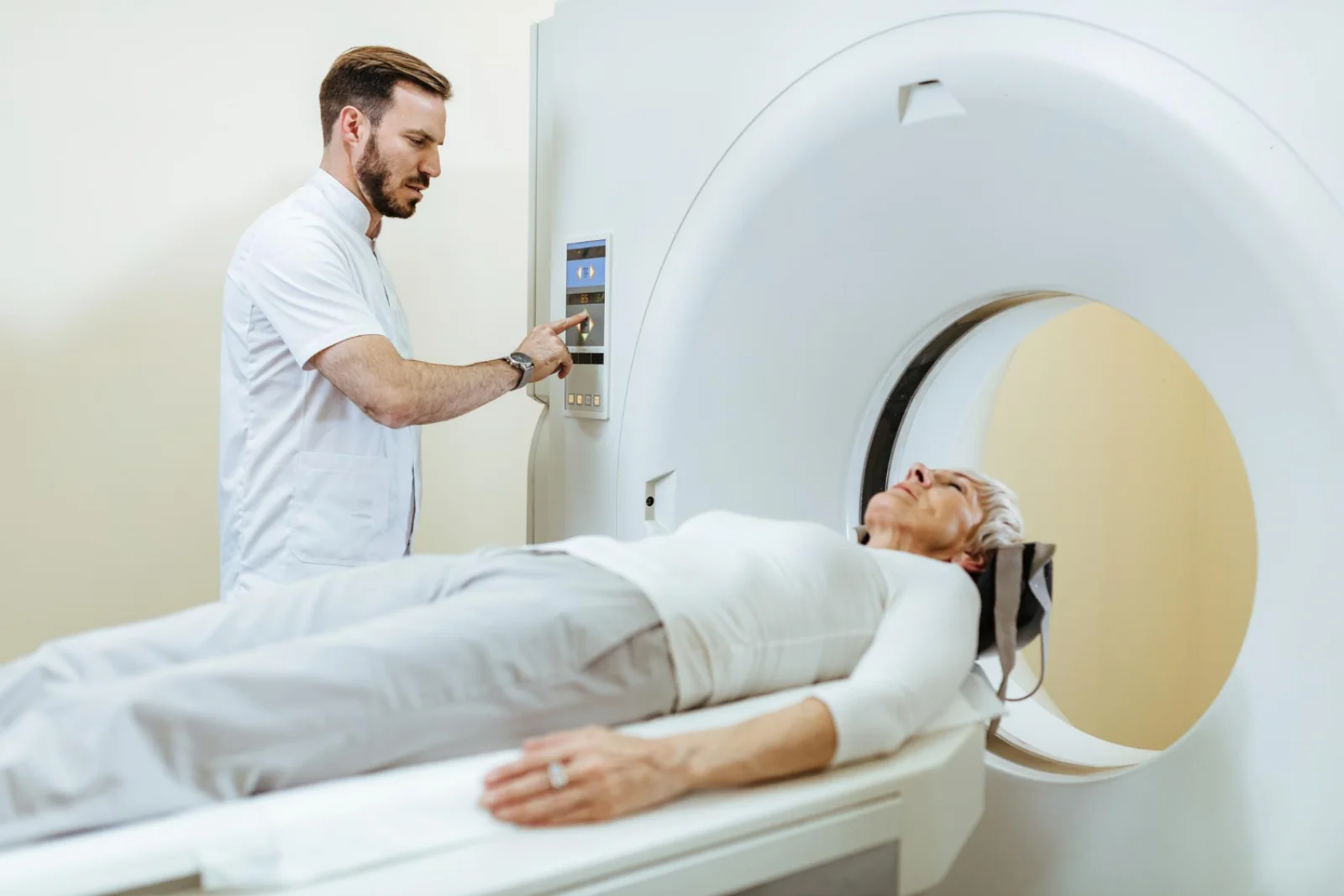
MRI Access for Head & Neck Evaluation
About MRI Access for Head & Neck Evaluation
MRI access for head and neck evaluation provides advanced soft tissue imaging for diagnosing tumors, nerve disorders, infections, and structural abnormalities in the ENT region. MRI offers excellent detail without radiation exposure. It is particularly useful for complex head and neck conditions.
Overview
MRI scans help evaluate: Head and neck tumors Nerve disorders Salivary gland disease Skull base lesions Deep neck infections Vocal cord abnormalities Soft tissue masses The imaging uses magnetic fields and radio waves to produce highly detailed images. MRI is often used in coordination with ENT, oncology, and neurology teams.
Understanding The Procedure
Symptoms That May Require MRI Access for Head & Neck Evaluation
- ⦾ Neck swelling or mass
- ⦾ Persistent throat symptoms
- ⦾ Facial nerve weakness
- ⦾ Head and neck pain
- ⦾ Suspected tumors or deep infections
Recovery & Outlook
MRI imaging improves early diagnosis and treatment planning for complex ENT disorders, supporting better long-term outcomes and disease monitoring.
Risks
- ⦾ Claustrophobia during scanning
- ⦾ Difficulty remaining still for long durations
- ⦾ Contrast allergy in rare cases
- ⦾ Restrictions for patients with metal implants
- ⦾ Anxiety during the procedure
Post-Operative Care
- ⦾ Continue ENT follow-up regularly
- ⦾ Inform doctors about delayed contrast reactions if any
- ⦾ Follow further diagnostic recommendations carefully
- ⦾ Maintain previous medications unless advised otherwise
- ⦾ Attend multidisciplinary consultations if required
Doctors Who Perform MRI Access for Head & Neck Evaluation
Meet experienced radiology & imaging doctors who regularly evaluate and perform mri access for head & neck evaluation.

Dr Madhu S D
MBBS, DMRD, DNB (Radiology)
KMC: 68309
Consultant Interventional Radiologist

Dr. Chinmay Nagesh
MD, DM - Neuroimaging & Interventional Radiology, MBBS, DNB - Radio Diagnosis Neuroradiologist
KMC: 80749
Interventional Radiologist and Neuroradiologist

Dr Navya shree
Mbbs, Md,Radiodiagnosis
KMC: 135652
Consultant Radiology
Prefer WhatsApp for MRI Access for Head & Neck Evaluation enquiries? Chat with our orthopedic team during working hours for quick assistance.